
When the Medicine Stops: How Europe's Wellness Retreats Are Rewriting the Script on Weight Loss
At Lanserhof and beyond, a new generation of programs addresses what happens after the injections end, treating stress, sleep, and the art of staying well.
SI
2 Jul 2026 · 5 MIN READ · UPDATED 17 AUG 2026
A Different Kind of Arrival
The question arrives a week before departure, direct and unadorned: How much does it cost? How much do you lose? It is the kind of inquiry that reduces a week at a European wellness retreat to its most transactional elements, as if the body were a ledger and the Alps merely backdrop. But the programs emerging across Austria, Spain, and Italy this year suggest a more complex calculus, one in which weight becomes only a single variable in a far broader equation of vitality.
At Global Chic Voyage, we've watched the wellness industry pivot quietly but decisively over the past eighteen months. The rise of tirzepatide and similar medications has rewritten not only how individuals approach weight management but how the places we retreat to are thinking about their role in that journey. The result is a new category of programming, one that treats pharmaceutical intervention not as conclusion but as prologue.
The Terrain Beyond the Injection
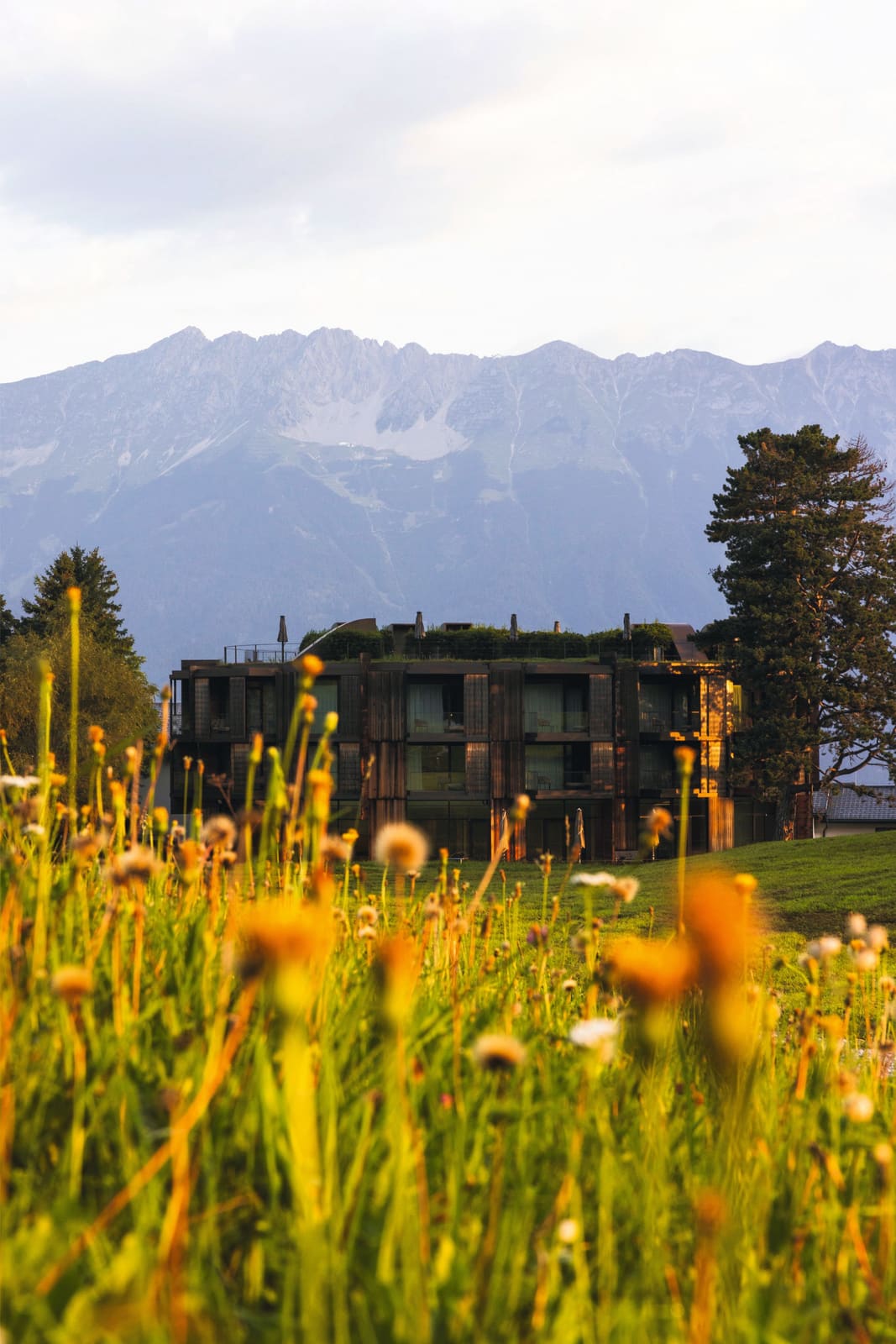
Lanserhof Lans, perched in the Austrian Tyrol with the snow-capped peaks as constant companion, has introduced a structured response to guests arriving mid-medication or post-taper. The retreat's approach begins not with the drug itself but with the life surrounding it: work patterns, sleep quality, movement rhythms, the small tyrannies of a sedentary day.
Dr. Katharina Sandtner, medical director at Lanserhof Lans, frames the philosophy plainly. The goal is not to celebrate or condemn the medications but to contextualize them within a larger portrait of health. Vitality, she notes, has no fixed relationship to weight; being slim offers no automatic passport to wellness, just as carrying extra pounds does not foreclose it. What matters is the whole system: how stress cascades into poor sleep, how poor sleep elevates ghrelin and suppresses leptin, how hormonal imbalance then drives cravings for high-fat, high-sugar foods and saps the will to move.
The programming reflects that systems-thinking. Guests undergo ergospirometry assessments, in which heart function, circulation, and metabolism are measured under exertion. Bone density scans and muscle mass analysis provide a baseline often overlooked in rapid weight reduction. Blood panels check for vitamin and mineral deficiencies; ultrasounds evaluate liver and thyroid health. The data accumulates not as judgment but as map.
Movement as Medicine, Not Punishment
The movement regimen at Lanserhof begins early, with 7am forest walks designed less for calorie burn than for circulatory awakening and stress reduction. Group yoga, breathwork, and a proprietary system of stretching and tapping follow. Personal training sessions emphasize balance: if a guest has been lifting weights aggressively, the focus shifts to mobility and countering muscular tightness.
One session involves ergospirometry, a treadmill test that increases in incline while monitoring metabolic response. Another pairs altitude training with controlled oxygen variation, a technique intended to support mitochondrial health and cellular renewal. Cryotherapy chambers drop to minus 116 degrees Fahrenheit for three-minute intervals, targeting inflammation.
The cumulative effect, as described by guests, is less about physical exhaustion than a gradual unburdening. Stress, which had settled like a fog, begins to lift. The body, wound tight by months or years of overwork and undersleep, starts to soften.
The Chewing Cure
Lanserhof's nutritional protocol descends from the Mayr method, a century-old detoxification approach built on digestive rest and mindful eating. Daily menus are spare: buckwheat toast with vegetable spread at breakfast, a single potato dressed with linseed oil and either vegetables or lean protein at lunch, soup in the evening. Epsom salts, bitter drops, and targeted supplements support the detoxifying process.
But the real intervention is slower, quieter. Guests are instructed to chew each mouthful a minimum of 30 times. The practice, tedious at first, rewires the relationship between mouth and mind. Chewing activates the production of hormones that signal satiety to the brain, a mechanism not unlike the one triggered by GLP-1 medications themselves. Eating becomes an act of attention rather than reflex. Hunger, paradoxically, recedes.
Sandtner describes the logic: less food, more chewing, natural hormonal response. It is simpler, she suggests, than most people imagine. And it requires no prescription.
What the Research Is Revealing
At Mount Med, another Austrian medi-spa, Dr. Alexander Papp has spent the past two years studying the intersection of GLP-1 medications and metabolic fasting protocols, in collaboration with colleagues from the University of Salerno. The findings underscore what clinicians have long suspected: rapid, sustained caloric restriction without adequate protein intake accelerates muscle and bone loss, degrades collagen in skin and joints, and suppresses basal metabolic rate. The result is often a rebound effect once medication ceases.
According to Dr. Papp, the solution lies in high-protein, anti-inflammatory nutrition paired with collagen peptide supplementation. Smaller, more frequent meals and a 12-hour overnight fast between dinner and breakfast help regulate insulin response without triggering the metabolic slowdown that invites weight regain. The goal is not simply to lose weight but to preserve the body's capacity to maintain that loss independently.
At Sha Spain, Dr. Vicente Mera approaches the issue through the lens of genomics and longevity. Excess weight, he argues, is often a symptom of deeper disruption: chronic stress, poor oxygenation, insufficient rest. Eastern therapies such as yoga and controlled breathwork interrupt the cycle, improving oxygen delivery and creating space for better decision-making around food and movement.
The Transition Question
Palazzo Fiuggi, situated east of Rome, has built its program around what it calls metabolic resilience. Dr. Fabrizio Di Salvio describes the work as equal parts science and soul. Nutrient deficiencies are corrected through IV infusions and targeted foods. Strength training is paired with bone-supportive therapies. But the real challenge, he notes, begins when the injections stop.
Appetite returns, sometimes with startling intensity. Guests who have spent months eating sparingly must relearn what it means to eat with intention rather than compulsion. The retreat's role is to provide scaffolding for that transition: coaching on mindful eating, lifestyle redesign, strategies for sustaining balance without pharmaceutical support. The body, in other words, must be taught to remember what it knew before the medication arrived.
The Resolve That Follows Stillness
What these programs share, beyond their diagnostic rigor and therapeutic variety, is an insistence on treating the person rather than the symptom. Weight becomes one data point among many. Sleep quality, stress load, movement habits, digestive health, hormonal balance, the capacity for rest, all are woven into a single tapestry.
At Lanserhof, guests leave with a single focus point, one behavior to anchor the weeks ahead. For some it is the daily walk. For others, the chewing practice. For still others, a commitment to eight hours of sleep or a reduction in screen time after dark. The instruction is not to overhaul everything at once but to find the thread that, when pulled, begins to unravel the tangle.
The mountains remain, snow-dusted and impassive. The soup is still just soup. But the framework has shifted. The question is no longer how much you lose, but what you learn to keep.
Photo: Enrico Constantini
Spot something wrong? Email editors@globalchicvoyage.com. We log every correction publicly.
RELATED
SEE ALL →
1 Jul 2026 / 5 min
3 Jul 2026 / 5 min

30 Jun 2026 / 5 min

23 Jun 2026 / 5 min