
Where Romance Meets the Rails: A Journey Through the World's Most Storied Train Voyages
In an age of instant arrivals, these legendary railway journeys remind us that the most profound luxury is time itself, measured in landscapes that unfold like memories through a carriage window.
CG
2 Jul 2026 · 5 MIN READ · UPDATED 17 AUG 2026
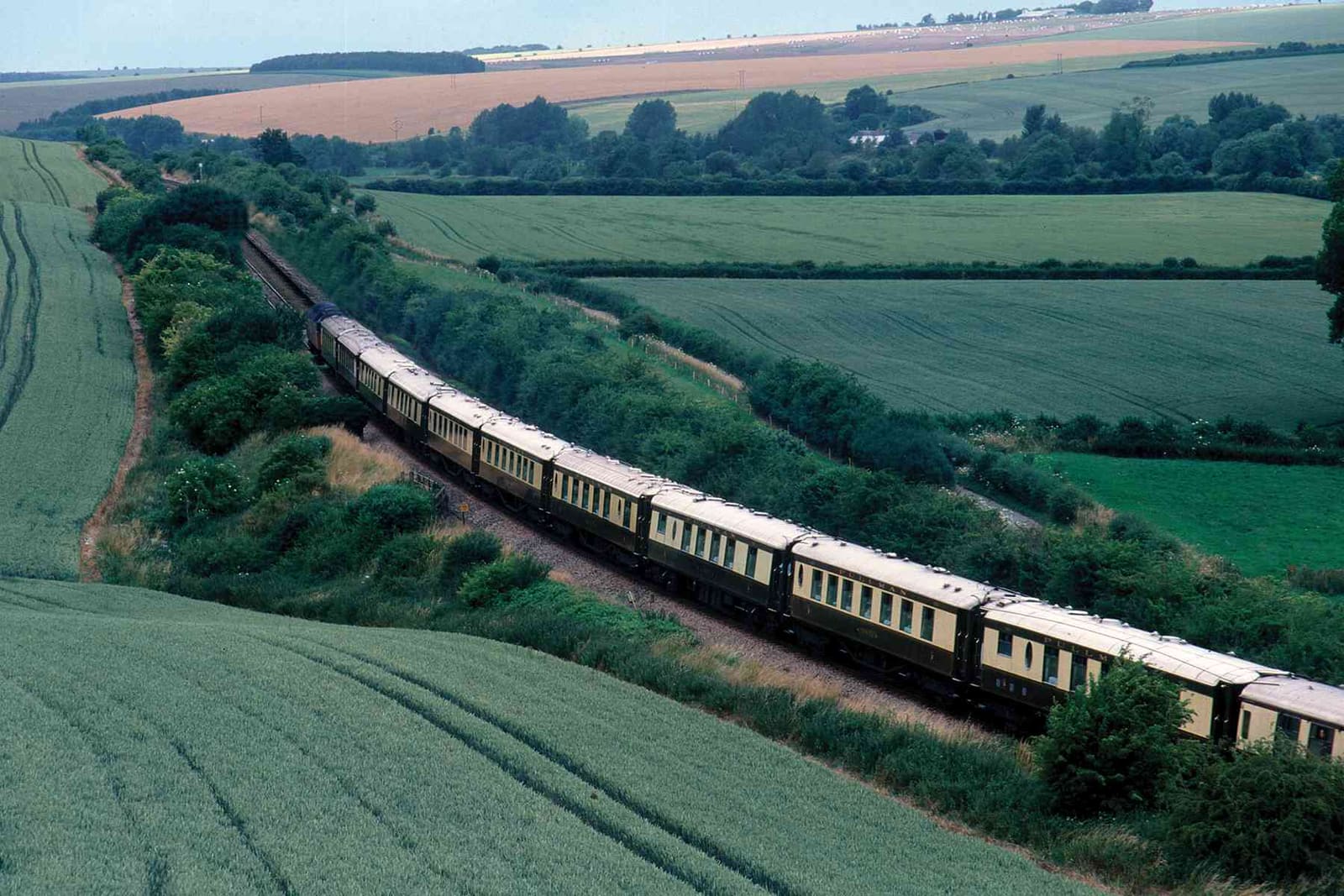
The Architecture of Slow Travel
There is a particular quality to morning light filtered through the window of a moving train, the way it catches on a crystal tumbler or illuminates the grain of polished wood paneling. At Global Chic Voyage, we've watched the resurgence of railway travel with something close to relief, a collective exhale after decades of velocity worship. These journeys, the ones that stretch across continents and time zones with deliberate grace, represent more than nostalgic recreation. They are acts of resistance against the tyranny of efficiency.
The appeal is not merely aesthetic, though the visual vocabulary of grand railway travel, with its Art Deco flourishes and burnished brass fittings, certainly captivates. What draws discerning travelers back to the rails is something more elemental: the permission to observe, to linger, to let the journey itself become the destination. In a world that measures worth in productivity, these trains offer a radical alternative, a space where idleness is not only permitted but expected.
The Geography of Glamour
The landscapes through which these legendary routes pass are as integral to the experience as the interiors they traverse. Consider the high plateaus of the Andes, where altitude becomes a physical presence, thinning the air and sharpening the quality of light. Or the mist-draped valleys of Southeast Asia, where rice terraces cascade down hillsides in geometric patterns that predate the railways by millennia. Each region imposes its own aesthetic on the journey, shaping not just what travelers see but how they see it.
What unites these disparate geographies is their resistance to the aerial view. From thirty thousand feet, landscapes flatten into abstraction, patterns divorced from human scale. But from a train window, the world unfolds at eye level. You see the shepherd moving his flock across a mountainside, the fishing boats pulled up on a riverbank, the architecture of ordinary life that air travel erases. This intimacy with place, this ground-level engagement with topography and culture, distinguishes rail travel from every other mode of movement.
The routes themselves often follow paths of historical significance, tracing trade routes, colonial ambitions, or engineering triumphs that once seemed impossible. To travel these lines is to inhabit multiple temporalities at once: the historical moment of their construction, the rhythms of the landscapes they traverse, and the contemporary luxury they now embody. It is travel as palimpsest, each journey layering new meaning over old tracks.
The Ritual of Arrival and Departure
Railway stations, unlike airports, still function as civic monuments, spaces where architecture makes an argument about a city's identity and aspirations. The great terminals, whether in Europe or Asia, were designed as thresholds, places where the mundane world gives way to the extraordinary. Their vaulted ceilings and monumental staircases speak to an era when departure was ceremony, when leaving meant something more than passing through a security checkpoint.
This sense of occasion extends to the trains themselves. Boarding is not the harried shuffle of airline travel but a more measured transition, often accompanied by champagne and the kind of solicitous attention that has largely vanished from modern hospitality. The staff on these journeys, many trained in traditions that span generations, understand that luxury is not about excess but about anticipation, knowing what a guest needs before they articulate it.
The rhythm of days aboard follows its own logic, structured around meals that are events in themselves, observation periods timed to the most dramatic landscapes, and the social rituals that emerge when strangers are thrown together in elegant proximity. Evenings might unfold in the bar car, where conversation flows as freely as the wine, or in the privacy of a cabin, watching the world go dark beyond the window. There is no Wi-Fi to distract, no obligation to be anywhere but present.
Craftsmanship in Motion
The interiors of these trains are studies in material culture, showcasing woods and textiles, metalwork and glasswork that represent the finest traditions of their regions. Marquetry panels in European carriages echo the decorative arts of the Belle Époque, while Asian routes might feature lacquerwork and silk that connect to centuries of craft tradition. These are not merely decorative choices but cultural statements, arguments about what constitutes refinement in different contexts.
At Global Chic Voyage, we've noted how contemporary refurbishments balance preservation with modern comfort, maintaining historical integrity while discreetly incorporating climate control, improved suspension, and updated amenities. The best examples of this work are nearly invisible, allowing passengers to inhabit a carefully curated past without sacrificing present-day expectations. It is conservation as hospitality, ensuring these rolling artifacts remain functional rather than museum pieces.
The dining cars deserve particular attention, for they represent some of the most sophisticated problem-solving in mobile hospitality. Preparing multi-course meals in a kitchen that sways and lurches, maintaining service standards that would satisfy the most demanding urban restaurants, all while moving through constantly changing elevations and climates, this requires a level of skill that often goes unrecognized. The chefs who work these galleys are masters of adaptation, creating menus that respond to regional ingredients while maintaining the elevated standards passengers expect.
The Social Ecology of Shared Journeys
Something shifts when strangers spend days together in close quarters, moving through landscapes that inspire a particular kind of reflective conversation. The social dynamics aboard luxury trains differ markedly from other travel contexts. There is none of the transactional quality that characterizes hotel interactions, where guests come and go without forming connections. Here, meals are often communal, observation platforms become gathering spots, and the bar car functions as a salon where conversations range from the profound to the delightfully trivial.
This enforced togetherness, far from feeling constraining, often becomes one of the journey's unexpected pleasures. We've heard from travelers who formed friendships that outlasted the trip, who found themselves in conversations they would never have initiated in ordinary circumstances. The train creates a temporary community, bound by shared experience and the understanding that this particular configuration of people and place will never exist again.
The staff, too, become part of this social ecosystem, their presence both professional and oddly intimate. Unlike hotel workers who serve hundreds of guests in rotation, train staff accompany the same small group for the duration of the journey, learning preferences, anticipating needs, and often serving as informal guides to the landscapes passing outside. This continuity of care creates relationships that feel less transactional, more genuinely hospitable.
Sustainability in the Age of Flight Shame
While luxury train travel makes no claims to being carbon-neutral, it occupies an interesting position in contemporary discussions of sustainable tourism. Rail transport, even in its most opulent forms, generates significantly lower emissions per passenger mile than air travel. For travelers increasingly conscious of their environmental impact yet unwilling to forgo exploration entirely, trains offer a middle path, a way to move through the world with marginally less damage.
But the sustainability argument extends beyond carbon accounting. These journeys encourage a different relationship with distance and time, one that resists the extractive logic of hit-and-run tourism. When you've spent three days crossing a continent, you arrive with a more nuanced understanding of its scale, its diversity, its complexity. The landscapes are not backdrops for selfies but places you've inhabited, however temporarily. This deeper engagement, we would argue, fosters a more respectful approach to travel, one that values quality of experience over quantity of destinations.
The preservation of these railway routes and rolling stock also represents a commitment to material culture, to maintaining objects and infrastructures that might otherwise be discarded in favor of newer, faster alternatives. There is something countercultural about investing in the restoration of vintage carriages when contemporary values privilege the new over the enduring. These trains become arguments for maintenance over replacement, for honoring what exists rather than constantly chasing innovation.
The Future of Slow Luxury
The renewed interest in luxury rail travel, particularly among younger travelers who might have been expected to favor speed and efficiency, suggests a broader shift in how we conceive of luxury itself. The old markers, excess and abundance, conspicuous consumption, feel increasingly hollow. What emerges in their place is luxury as time, as attention, as the freedom to move through the world at a human pace.
We're seeing this play out in the expansion and renovation of routes across multiple continents, from South America to Africa to Asia. New carriages are being commissioned, old routes revived, and the definition of what constitutes a luxury train journey continues to evolve. Some emphasize wilderness access, positioning the train as a mobile base camp for exploring remote regions. Others lean into cultural immersion, with itineraries that include off-train excursions to archaeological sites, artisan workshops, or private performances.
What remains constant is the essential appeal of the format itself: the combination of movement and stillness, of spectacular landscapes viewed from secure comfort, of social interaction balanced with private contemplation. These trains succeed because they offer something genuinely different from other forms of luxury travel, an experience that cannot be replicated by flying first class or staying in the finest hotels. They create a category of their own, one defined not by amenities or thread counts but by the quality of attention they allow.
At Global Chic Voyage, we return to these journeys not out of nostalgia but because they represent travel at its most considered, most intentional. They remind us that the point is not to arrive but to notice, not to conquer distance but to inhabit it. In the rhythm of wheels on rails, in the passage of light across polished wood, in the slow unfurling of landscapes too vast to comprehend all at once, we find something essential that faster travel erases: the profound luxury of being fully, completely present.
Photo: Belmond
Spot something wrong? Email editors@globalchicvoyage.com. We log every correction publicly.
RELATED
SEE ALL →
29 Jul 2026 / 5 min
23 Jul 2026 / 5 min
21 Jul 2026 / 5 min

15 Jul 2026 / 5 min