
Where Southern India's Heritage Becomes Your Temporary Address
Five properties where centuries-old architecture, royal lineages, and unhurried rituals conspire to redefine what a hotel can be
SI
23 Jun 2026 · 5 MIN READ · UPDATED 17 AUG 2026
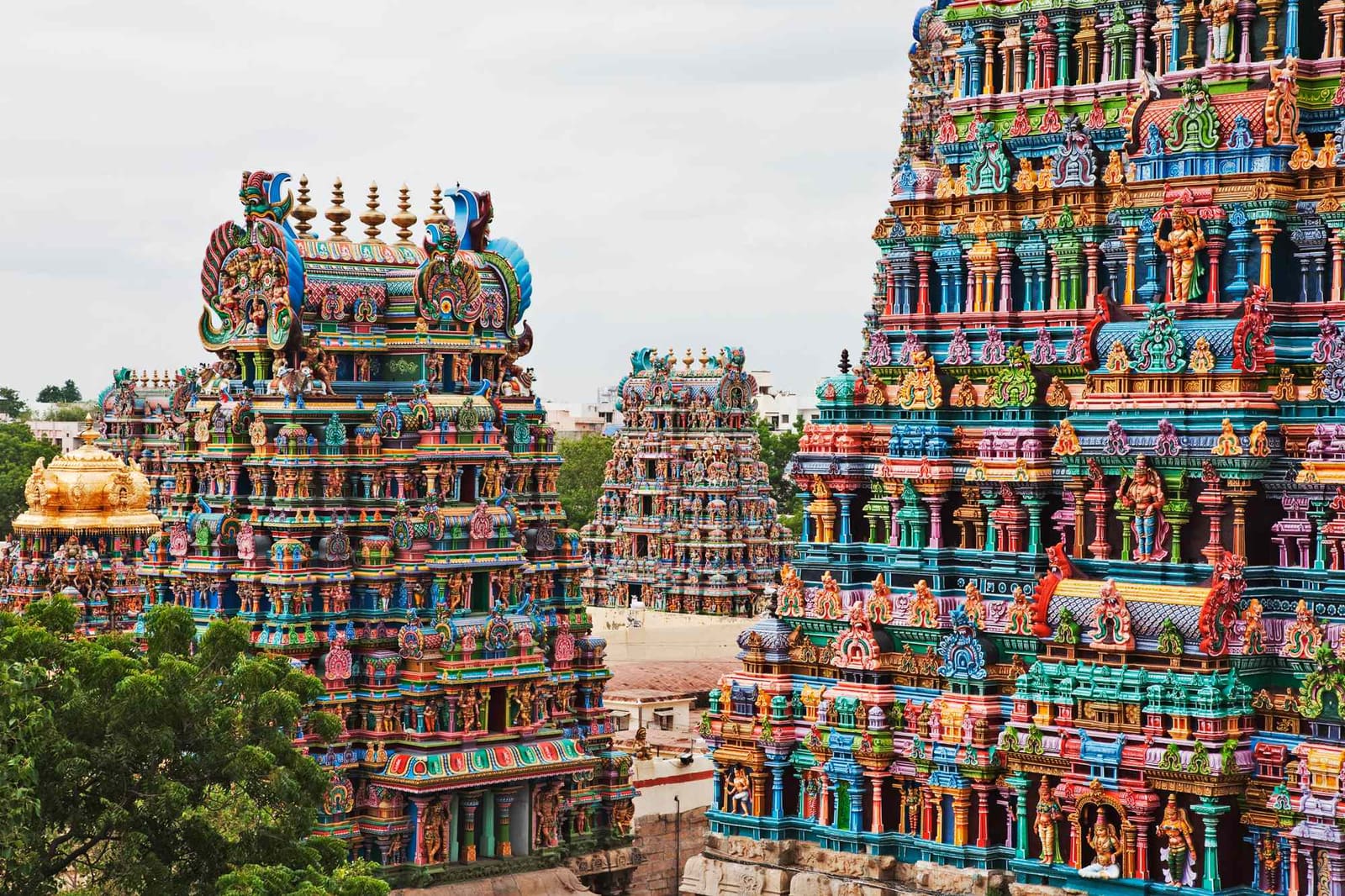
The Threshold Between Past and Present
There is a particular quality of light that filters through carved wooden screens in the late afternoon - golden, muted, striped with shadow - that no contemporary hotel, however meticulously designed, can replicate. At Global Chic Voyage, we have watched the luxury hospitality landscape evolve toward ever more polished iterations of comfort, yet the properties that linger longest in memory are often those that refuse to erase their own history. In Southern India, a constellation of heritage hotels occupies precisely this threshold: buildings that have housed royalty, witnessed monsoons for a century or more, and now open their courtyards to travelers willing to trade the predictable for the profound.
These are not museums costumed as lodging. They are living structures where the weight of time becomes tactile - in the cool of thick laterite walls, in the creak of teak staircases, in the faint perfume of sandalwood that seems to rise from the very floors. To stay in one is to participate, however briefly, in a continuity that predates the very notion of "hospitality industry." It is also, we would argue, one of the most compelling arguments for why travel should slow down.
Former Royal Mansions as Portals to Dynastic Memory
The phenomenon of erstwhile palaces and aristocratic estates transforming into hotels is not unique to India, but the subcontinent's particular history - of princely states, zamindari systems, and post-independence land reforms - has created a category of property unlike any other. In Southern India, where the Wodeyar dynasty of Mysore, the Nizam of Hyderabad, and countless smaller royal houses once held sway, many of these residences have been meticulously adapted by descendants who understand that preservation requires both capital and purpose.
What distinguishes a former royal mansion from a boutique hotel with colonial-era furniture is the presence of original architectural intent. These buildings were conceived not merely as shelters but as statements of power, taste, and cosmology. Courtyards align with cardinal directions; water features cool the air through principles of passive climate control refined over centuries; frescoes and tile work tell stories in visual language. When you occupy a suite in such a structure, you are not simply renting square footage; you are inhabiting a spatial narrative.
We have found that the best of these properties resist the temptation to over-restore. A certain patina - the uneven wear of marble thresholds, the faded grandeur of hand-painted ceilings - becomes part of the aesthetic vocabulary. It signals authenticity, a refusal to sanitize history into theme-park legibility. The luxury here is not in newness but in stewardship, in the quiet pride of families who have chosen to share rather than sell.
The Hundred-Year Villa and the Discipline of Slowness
If royal mansions speak to dynastic ambition, the century-old villas of Southern India whisper of a different ethic: domestic refinement, the cultivation of gardens, the rhythms of agrarian life punctuated by ritual. Many of these properties began as plantation estates - coffee, cardamom, pepper - where colonial-era planters and local landowners built homes designed to withstand monsoons and maximize cross-ventilation. The architecture is hybrid: European symmetry married to local materials, verandas deep enough to function as open-air rooms, roofs pitched to shed rain with ferocity.
To stay in such a villa is to submit to a different clock. Breakfast may be served when the kitchen deems the dosas ready, not at a buffet's appointed hour. Afternoon tea arrives with the kind of ceremony that assumes you have nowhere else to be. Evenings are measured not in programming but in the gradual dimming of daylight, the emergence of fireflies, the distant call of a Malabar trogon. This is not inefficiency; it is the discipline of slowness, a luxury that no concierge can manufacture.
At Global Chic Voyage, we have come to regard these villas as laboratories of a sort - places where one can test the hypothesis that time, when unstructured, expands rather than evaporates. The absence of televisions, the intermittent Wi-Fi, the lack of a gym with mirrored walls: these are not deprivations but invitations. To read. To walk. To notice the architecture of a spider's web strung between mango branches.
Architecture as Cultural Text
One cannot discuss heritage hotels in Southern India without reckoning with the region's architectural plurality. Here, Dravidian temple forms coexist with Indo-Saracenic flourishes, Portuguese-influenced facades, and the clean lines of early-twentieth-century rationalism. The hotels that succeed as cultural experiences are those that allow their architecture to function as text - something to be read, interpreted, and appreciated beyond its utility.
Consider the courtyard typology, ubiquitous across the region. In Hindu Brahmin homes, the central courtyard was both a source of light and air and a ritually significant space, often housing the tulsi plant, considered sacred. In Muslim-influenced architecture, courtyards provided privacy, a buffer between the domestic and the public. In heritage hotels, these courtyards become communal zones where guests gather for meals, but their original purpose remains legible. You dine beneath the same sky that once witnessed family ceremonies, business negotiations, the private dramas of generations.
Similarly, the jharokha - the overhanging enclosed balcony - offers more than a picturesque vantage point. It was designed to allow women in purdah to observe street life unseen, a spatial solution to social constraint. Today, as a hotel guest, you might sip your morning coffee in such a niche, unaware of its original function, yet still benefiting from its careful calibration of exposure and enclosure. The architecture does not announce its politics; it simply performs them, quietly, across centuries.
Culinary Memory and the Politics of the Table
Heritage hotels in Southern India often function as custodians of culinary traditions that have all but vanished from restaurant menus. This is particularly true of properties run by families who retain access to handwritten recipe books, to cooks trained in the kitchens of aristocratic households, to knowledge of which spice blend defines a particular sub-caste's wedding feast or a royal house's preferred breakfast.
The meals served in these hotels are not fusion experiments or Instagram-optimized thalis. They are, at their best, acts of cultural transmission. A Coorgi pandi curry, dense with black pepper and vinegar, tastes different when prepared in a Kodava family's ancestral kitchen, where the proportions have been refined over generations. A Chettinad vegetarian spread, with its seventeen side dishes and precise sequencing, becomes a lesson in the philosophy of balance - of the six tastes, of hot and cool foods, of the meal as a microcosm of the well-ordered life.
We have noticed, too, that many of these properties source ingredients from their own estates or from neighboring smallholders with whom they have decades-long relationships. This is not farm-to-table as marketing slogan but as lived practice, rooted in agrarian networks that predate the contemporary food movement by centuries. The coffee you drink at breakfast may have been grown within walking distance, processed by hand, roasted in small batches. It tastes, unmistakably, of place.
The Ethical Complexities of Heritage Tourism
To celebrate these hotels without acknowledging the complexities they embody would be incomplete. Many were built on the labor of servants and maintained by hierarchies that contemporary ethics rightly interrogate. The wealth that funded their construction often derived from colonial-era land grants, exploitative agricultural systems, or complicity with imperial power. To stay in a former royal mansion is, in some sense, to occupy the fruits of inequality.
The question, then, is not whether these histories exist - they do, indelibly - but how they are contextualized. The most thoughtful heritage hotels in Southern India engage with their pasts in ways that go beyond nostalgic anecdote. Some have converted former servants' quarters into staff housing with modern amenities, a quiet acknowledgment of labor's dignity. Others have opened their libraries and archives to researchers, recognizing that history is a public good. A few have established foundations that support local artisans, fund education, or preserve endangered crafts.
This does not erase the original inequities, but it suggests a model of heritage tourism that is reparative rather than merely extractive. At Global Chic Voyage, we believe that travelers, too, have a role in this equation: to ask questions, to seek out properties that demonstrate genuine community engagement, to understand that the luxury of staying in a hundred-year-old villa carries with it a responsibility to appreciate the labor - past and present - that sustains it.
The Rituals That Anchor a Stay
What transforms a heritage hotel from architectural curiosity into meaningful experience is often the presence of ritual. Not the invented rituals of spa packages and turndown chocolates, but the older, more durable practices that structure daily life in Southern India. Many of these hotels retain elements of household worship: a small shrine in the courtyard where incense is lit at dawn, the rangoli patterns drawn fresh each morning at the threshold, the oil lamps lit at dusk.
Guests are rarely required to participate, but neither are these rituals hidden away. They unfold in plain sight, part of the property's lived texture. We have found that this visibility is itself a form of hospitality, an invitation to witness without the pressure to perform. You may wake to the sound of a conch shell blown in the pre-dawn dark, signaling prayers you do not share, yet the sound becomes part of the landscape of your stay, a reminder that you are a guest in someone else's cosmology.
Similarly, the rhythms of meal times, the afternoon lull when the entire household seems to pause, the evening hour when staff and family gather for tea - these are not schedule items but the deep structure of the day. To stay in such a place is to be gently, incrementally, inducted into a different tempo. It is one of the reasons we return.
Why These Properties Matter Now
In an era when much of luxury travel has homogenized into a globalized aesthetic - the same Italian linens, the same rainforest showerheads, the same lobby playlists from Mumbai to Miami - Southern India's heritage hotels offer something increasingly rare: specificity. They are inextricable from their location, their history, their materials. They cannot be replicated, franchised, or reduced to a brand standard.
This specificity is not incidental; it is the point. As travel resumes its pre-pandemic volumes and the pressures on fragile ecosystems and communities intensify, the question of what kind of tourism we want to support becomes urgent. Properties that invest in local craft, that employ multi-generational staff, that preserve architectural knowledge in an age of demolition and redevelopment - these are not merely hotels. They are arguments for a different kind of development, one that values continuity over disruption, depth over novelty.
At Global Chic Voyage, we have long maintained that the most profound luxury is the luxury of context - of understanding where you are, how the place came to be, what it asks of you in return. Southern India's heritage hotels, at their best, provide precisely this. They do not shield you from complexity; they invite you into it. And in doing so, they offer something no amount of thread count can match: the sense that your presence, however temporary, participates in a story much larger and longer than your own.
Spot something wrong? Email editors@globalchicvoyage.com. We log every correction publicly.
RELATED
SEE ALL →
27 Jul 2026 / 5 min
22 Jun 2026 / 5 min
10 Jun 2026 / 5 min
22 Jul 2026 / 5 min