
The Renaissance City That Still Holds Europe's Heart
Florence has reclaimed its place as the continent's most beloved destination, and the reasons run deeper than its famous museums.
SI
9 Jul 2026 · 5 MIN READ · UPDATED 17 AUG 2026
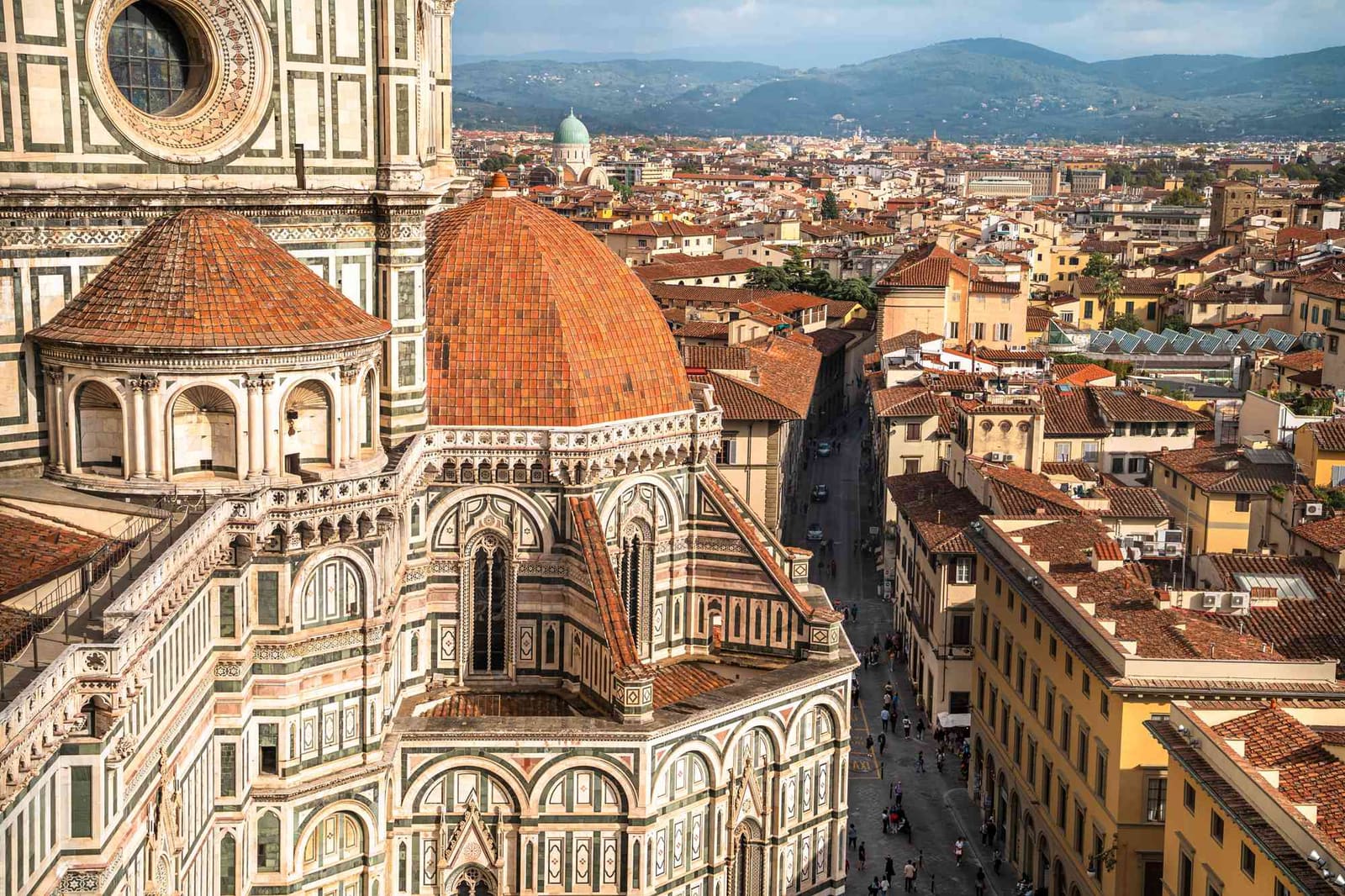
A City That Refuses to Be Frozen
Stand on the Ponte Santa Trinita at dusk, when the light turns the Arno into molten copper, and you might understand why travelers keep returning to Florence with the devotion usually reserved for pilgrimage. The city that birthed the Renaissance has just been recognized as the finest urban destination in Europe, but those who know it well will tell you the accolade misses something essential: Florence has never stopped evolving, never allowed itself to become merely a beautiful museum.
At Global Chic Voyage, we've watched this Tuscan capital navigate a delicate dance between preservation and reinvention. The challenge facing any city blessed with such overwhelming cultural patrimony is how to remain vital without betraying its inheritance. Florence, more than perhaps any European peer, has managed to honor both imperatives.
The Architecture of Daily Life
The city's architectural brilliance exists not only in the Duomo or the Palazzo Vecchio, structures so familiar they risk becoming visual clichés, but in the way Renaissance principles still govern the rhythm of everyday movement. The proportion of piazzas to pedestrian lanes, the relationship between public arcade and private courtyard, the careful calibration of shadow and sun across Via de' Tornabuoni on a July afternoon: these are the design details that separate a city built for human flourishing from one merely built for humans.
Contemporary architects working here understand this inheritance. New interventions in the historic fabric tend toward restraint, a kind of whispered conversation with Brunelleschi rather than a shouted rebuttal. The recent restoration of certain palazzi has revealed original frescoes beneath centuries of whitewash, reminding us that even preservation is a form of discovery.
Walk through the Oltrarno district in the early morning, before the tour groups cross the river, and you'll find artisan workshops where furniture makers and bookbinders still practice crafts that predate the Medici. These are not heritage performances staged for tourists but living traditions, economically viable because the city has maintained a culture that values the handmade object, the bespoke gesture.
Where Heritage Meets Appetite
Florentine cuisine has always been a study in restraint, an argument that excellence emerges from limitation rather than abundance. The canonical bistecca alla fiorentina, the ribollita thick enough to hold a spoon upright, the simple perfection of crostini neri: these dishes rely on the quality of their ingredients and the discipline of their preparation.
What has shifted in recent years is the city's willingness to let younger chefs honor tradition while gently bending its rules. New trattorias in San Frediano serve variations on classic preparations that would have scandalized an earlier generation but now feel like natural extensions of the Tuscan pantry. A risotto finished with Chianti Classico reduction. Lampredotto, the iconic tripe sandwich, reimagined as a refined starter with salsa verde and fried sage.
The wine culture here has also matured beyond the straw-wrapped Chianti bottles that once defined Tuscan viticulture. Sommeliers at the city's better restaurants now pour Super Tuscans alongside natural wines from small producers in the Chianti hills, building bridges between the region's aristocratic winemaking heritage and its experimental present.
The Intimacy of Scale
Part of Florence's enduring appeal lies in its walkability, a characteristic that becomes more precious as European capitals sprawl into metropolitan regions. You can traverse the historic center in twenty minutes, yet spend a lifetime discovering its layered secrets. This compression creates a particular kind of urban intimacy. Shopkeepers remember your face after two visits. Baristas learn your morning order. The city begins to feel less like a destination and more like a temporary home.
The accommodation landscape reflects this intimacy. Grand hotels occupy Renaissance palaces, their public rooms frescoed and gilded, but the city's most characterful lodgings tend to be smaller: ten-room guesthouses in converted convents, family-run pensioni where breakfast is served in a loggia overlooking terracotta roofs, apartments tucked into medieval towers where you climb one hundred stone steps to earn a view of the Duomo.
These spaces succeed not through luxury amenities but through their rootedness in place. They offer something increasingly rare in an age of global hotel brands: the sense that you are sleeping within the city's living history rather than merely observing it from a comfortable distance.
The Enduring Question of Overtourism
To celebrate Florence without acknowledging its struggles with mass tourism would be to paint an incomplete portrait. The city has wrestled for years with the challenge of managing visitor numbers that, in peak season, threaten to overwhelm both infrastructure and local quality of life. Streets near the Uffizi become impassable rivers of tour groups. Restaurants in the historic core increasingly cater to one-time visitors rather than returning neighbors.
Yet solutions are emerging, however imperfectly. Timed entry systems at major museums have reduced bottlenecks. The city has incentivized restaurants and shops to remain in residential neighborhoods rather than clustering around tourist magnets. Local administrators have begun to recognize that preserving Florence's character requires protecting the economic and social fabric that allows Florentines themselves to continue living in the center.
The visitors we most admire are those who approach the city with patience and respect, who understand that the goal is not to check every sight off a list but to move through Florence at a tempo that allows genuine observation. Stay longer. Walk more. Eat where locals eat. Sit in the Boboli Gardens for an hour without agenda. These small disciplines transform tourism into something closer to temporary residence.
A Standard for Urban Preservation
The recognition of Florence as Europe's finest city matters less as a competitive ranking than as an acknowledgment of what the city represents: a model for how historic urban centers can remain relevant without sacrificing their identity. In an era when so many European capitals feel increasingly interchangeable, their high streets dominated by the same multinational retailers, their skylines punctured by the same glass towers, Florence has maintained its singularity.
This is not an accident of geography or a passive result of having spectacular art collections. It is the outcome of conscious choices, made over decades, about what kind of city Florence wants to be. The decision to restrict vehicle traffic in the center. The zoning laws that protect artisan workshops from being converted into souvenir shops. The investment in restoration projects that employ traditional materials and techniques. Each choice represents a vote for continuity over novelty, for character over convenience.
Other cities struggling with similar questions, how to balance heritage with growth, tradition with innovation, might look to Florence not for a blueprint to copy but for a philosophy to adapt. The Tuscan capital suggests that the path forward sometimes requires looking backward, that progress and preservation need not be opposing forces.
The Light That Never Changes
In the end, what draws us back to Florence, what earns it this latest distinction, may be something less tangible than its monuments or museums. It is the quality of afternoon light filtering through shutters onto ochre walls. The sound of swifts screaming through narrow streets at twilight. The way the city smells after rain, when wet stone releases the scent of centuries.
These sensory experiences connect today's visitor to every traveler who has walked these streets across five hundred years. They create a continuity of experience that transcends historical period, a reminder that certain human responses to beauty and place remain constant even as everything else changes. Florence endures not because it has been perfectly preserved in amber but because it has found a way to remain itself while accommodating the needs of each new generation.
For those planning a visit, or a return, the best advice remains simple: arrive with curiosity rather than a checklist, with time rather than haste. The city will reward patience with revelation, routine with intimacy. And perhaps, standing on that bridge at dusk, watching the light perform its ancient alchemy on the river, you will understand why Florence continues to hold such a particular claim on the traveler's imagination.
Photo: Evgeniya Vlasova / Travel + Leisure
Spot something wrong? Email editors@globalchicvoyage.com. We log every correction publicly.
RELATED
SEE ALL →24 Jul 2026 / 5 min
15 Jul 2026 / 5 min
14 Jul 2026 / 5 min
24 Mar 2026 / 5 min