
Where the Bay Meets the Mediterranean: Inside Sausalito's Houseboat Colony
Just beyond the Golden Gate Bridge, a waterfront enclave channels the Italian Riviera with floating homes, hillside charm, and a quieter pulse than its famous neighbor.
ML
7 Aug 2026 · 5 MIN READ · UPDATED 17 AUG 2026
A Different Coast, a Different Tempo
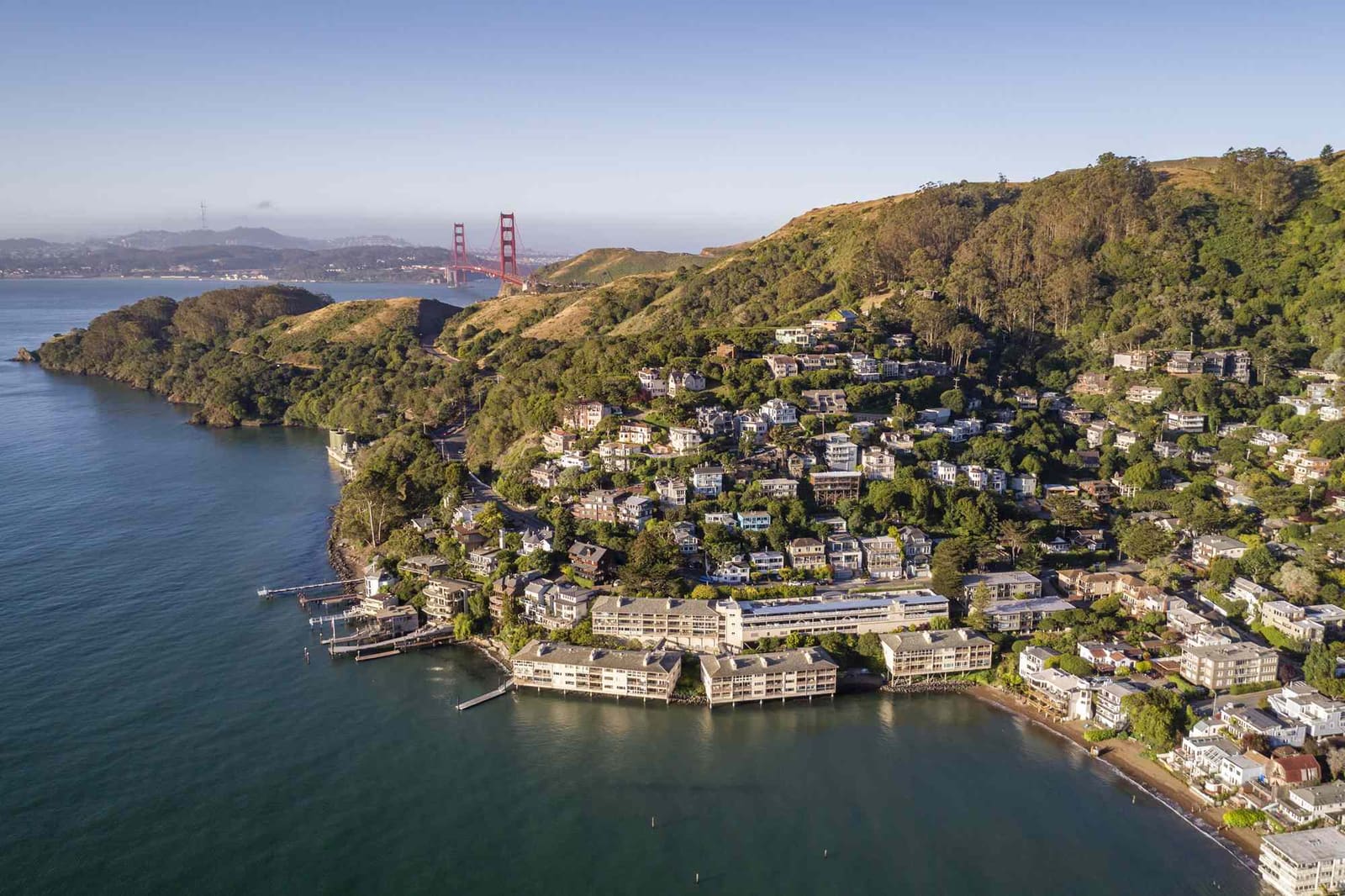
The morning fog peels back slowly here, revealing terracotta rooflines and weathered docks that jut into Richardson Bay like the fingers of an old hand. Sausalito sits across the water from San Francisco, close enough that commuters cross the bridge each day, yet far enough that the town has preserved something the city long ago surrendered: a rhythm dictated by tides rather than traffic, by light on water rather than the glow of screens.
At Global Chic Voyage, we've watched travelers gravitate toward places that offer proximity without proximity's usual cost. Sausalito is one such place. Its nickname as California's Italian Riviera is not mere marketing; walk the waterfront at dusk, when the bay takes on the pewter tones of the Ligurian Sea, and the comparison feels earned. The hillsides cascade toward the water in tiers of bougainvillea and cypress. The cafés spill onto narrow sidewalks. The pace is unhurried in a way that feels deliberate, cultivated over decades.
What sets Sausalito apart is not simply its Mediterranean affect but the way that aesthetic has been layered onto a distinctly Californian eccentricity. The houseboat community that lines the northern edge of town is the clearest expression of this duality: structures that float, literally and figuratively, between bohemian experiment and waterfront luxury, between the counterculture of the 1960s and the real-estate pressures of the present.
The Floating Architecture of Rebellion
The houseboat colonies began as improvisation. In the years following World War II, artists and dropouts moored old ferries and barges in the shallows of Richardson Bay, seeking cheap rent and a life outside the conventions of suburban sprawl. What started as makeshift has evolved into something more complex: a neighborhood of hand-built homes that defy easy categorization.
Some houseboats are little more than salvaged wood and corrugated metal, their gardens spilling over the railings in tangles of nasturtium and mint. Others are polished affairs with floor-to-ceiling glass, solar panels, and kayaks lashed to custom decks. The effect is a kind of floating vernacular architecture, each structure a negotiation between function and fantasy, between what the water will tolerate and what the imagination demands.
Walking the docks requires permission or invitation; these are private moorings, not public piers. But even from the road that skirts the colony, the sense of a parallel existence is palpable. Smoke curls from a chimney on a Wednesday afternoon. A woman in a wetsuit rinses a paddleboard. A cat watches from a porthole. It is a vision of domesticity unmoored, in both senses of the word.
Hillside Layers and Coastal Light
Beyond the waterline, Sausalito climbs. The town's topography is its fortune: steep enough to offer views, gentle enough to remain walkable. The commercial strip along Bridgeway Boulevard caters to day-trippers, its galleries and gelato shops bright and accessible. But turn uphill onto Princess Street or Bulkley Avenue, and the character shifts. Here are the homes that channel the Riviera most convincingly: stucco villas with tile roofs, gardens terraced into the slope, staircases that zigzag between properties like the caruggi of Portofino.
The light, too, contributes to the Mediterranean illusion. Sausalito sits on the bay's northern shore, facing south across the water toward the city. The sun strikes the town directly for much of the day, unobstructed by the fog that often shrouds San Francisco. The effect is a kind of double exposure: the bay's cool, northern temperament overlaid with the warm, clarifying light of a more southerly latitude.
This interplay of climate and geography has shaped the town's appeal. It is a place where one can sit outdoors in January, where gardens bloom year-round, where the act of simply being outside feels less like a concession to weather and more like a deliberate choice. For travelers accustomed to the gray uncertainties of coastal northern California, Sausalito offers a microclimate that feels like a minor miracle.
The Proximity Paradox
Sausalito's location is both its greatest asset and its most complicated legacy. The town is less than ten miles from San Francisco's financial district, a short drive across the Golden Gate Bridge or a ferry ride that takes thirty minutes. This nearness has made it a bedroom community for the city, a weekend destination for tourists, and, increasingly, a target for the same real-estate pressures that have reshaped much of the Bay Area.
The tension is visible. The houseboat community has fought for decades to maintain its autonomy against encroaching regulation and rising mooring fees. The hillside homes, once affordable to artists and teachers, now command prices that reflect their views and their zip code. The town's commercial core has tilted toward visitors, its restaurants and shops calibrated to the rhythms of the ferry schedule rather than the needs of year-round residents.
Yet Sausalito has managed, more successfully than many of its neighbors, to retain a sense of itself. The Mediterranean aesthetic is not a veneer applied for tourist consumption; it is woven into the town's fabric, a product of its climate, its topography, and the choices made by generations of residents who sought, and found, a different way of living within reach of a major city.
A Study in Edges
What we return to, when we think of Sausalito, is the quality of its edges. The place where the houseboats meet the bay. The line where the hillside gardens give way to open water. The threshold between the town's quieter residential streets and the bustle of the waterfront. These are the spaces where the Mediterranean comparison holds most firmly, where the sense of being in two places at once, of inhabiting a landscape that is both Californian and vaguely European, feels most acute.
It is a town that rewards slow movement and repeated visits. A single afternoon spent browsing the galleries along Bridgeway will yield a pleasant but incomplete impression. Return at different hours, in different seasons, and the town's subtleties emerge: the way the light shifts on the water, the rhythms of the houseboat community, the hidden staircases that connect one tier of hillside to another.
Sausalito is not without its contradictions. It is a town that celebrates its bohemian past while grappling with the pressures of its affluent present. It is a place that trades on its Mediterranean resemblance while remaining unmistakably Californian. But these tensions are part of what makes it worth exploring. It is a town that exists in the space between things, a pocket of the Bay Area that has managed to hold onto something rare: a sense of place that feels both cultivated and genuine, both close at hand and pleasantly far away.
Credit: Jason Doiy / Getty Images
Spot something wrong? Email editors@globalchicvoyage.com. We log every correction publicly.
RELATED
SEE ALL →
7 Jul 2026 / 5 min
6 Jul 2026 / 5 min
8 Aug 2026 / 5 min
31 Jul 2026 / 5 min