
A Decade of Urban Excellence: What the Best Cities Share
From Tokyo's unspoken civility to Copenhagen's collective responsibility, the cities that have defined modern urban living reveal patterns worth understanding.
SI
23 Jun 2026 · 5 MIN READ · UPDATED 17 AUG 2026
The Invisible Architecture of Great Cities
There is a moment, just after dawn in certain European capitals, when the street sweepers have finished their rounds but before the first commuters emerge. The pavements gleam. The air holds a particular clarity. You can walk five blocks and encounter only the soft percussion of your own footsteps. It is in these moments that you understand what sets exceptional cities apart from merely functional ones: an underlying belief that urban life should be considered, that public space belongs to everyone, and that the small gestures matter as much as the grand infrastructure.
At Global Chic Voyage, we have watched a rotating cast of cities claim the title of most livable, most desirable, most thoughtfully designed. Over the past decade, from 2016 through 2025, a pattern has emerged. The cities that rise to the top share less a checklist of amenities than a philosophy about what urban living should offer. They understand that quality of life cannot be reduced to crime statistics or transport efficiency, though both help. Instead, these places cultivate something harder to quantify: a sense that the city itself is designed around human flourishing, not merely economic function.
The Scandinavian Consensus
Copenhagen claimed top honors twice in recent years, in 2021 and 2022, and the Danish capital's success rests on a concept that does not translate neatly into English. The word is samfunssind, which gestures toward collective responsibility, a pride in social cohesion, an understanding that individual wellbeing depends on communal care. This is not abstract philosophy. It manifests in bike lanes wide enough that children can pedal to school unaccompanied, in harbor water clean enough for lunchtime swims, in a metro system that connects previously isolated neighborhoods with Swiss precision.
The pandemic revealed something about Copenhagen that other cities might envy. When restrictions lifted, residents returned to normal life without fanfare or friction. There was no collective trauma to process, no culture war over public health measures. The transition felt seamless because the city had already fostered the trust and mutual regard necessary to navigate crisis. Great restaurants continued opening. Cultural institutions thrived. The economy hummed along. The whole apparatus of urban life resumed as if it had never stopped, because the underlying social contract remained intact.
What Copenhagen demonstrates, and what Vienna and Zürich echo in their own registers, is that Northern European cities have largely solved the puzzle of how to balance individual freedom with collective responsibility. Vienna, which topped rankings in 2023, continues expanding its social housing program while crime rates hit twenty-year lows. Community-run parklets proliferate in neighborhoods that lack green space. Driverless trains and new sleeper services extend an already enviable transport network. The city manages to feel both intimately scaled and globally connected, a trick few metropolises pull off.
Zürich, the 2019 winner, offers a slightly different model. Here the emphasis falls on environmental sustainability paired with economic vitality. The city aims to become carbon neutral, to limit per-capita energy consumption to 2,000 watts annually by 2050. Yet the streets remain filled with luxury cars, the banking sector thrives, and the shops along Bahnhofstrasse could compete with any luxury corridor in Europe. Zürich proves that environmental ambition need not come at the expense of prosperity, that a city can be both green and affluent, both conscientious and cosmopolitan.
The German Equation
Munich earned recognition in both 2018 and 2024, and the Bavarian capital represents yet another approach to urban excellence. This is a city that refuses to choose between competing goods. It wants robust infrastructure and cultural vibrancy, economic dynamism and access to nature, local identity and international openness. Remarkably, it achieves all of these simultaneously.
The statistics tell part of the story. Munich's population has grown by nearly a third since 2000, far outpacing Berlin, Hamburg, and Frankfurt. Seven of Germany's 40 largest companies call it home. The city boasts the highest proportion of employees with academic degrees in the country, at 41 percent, a figure supported by institutions like the Technical University of Munich and LMU München. In December 2024, according to the city, an additional €668 million was allocated for building and renovating educational facilities, part of an €8.4 billion scheme launched in 2011.
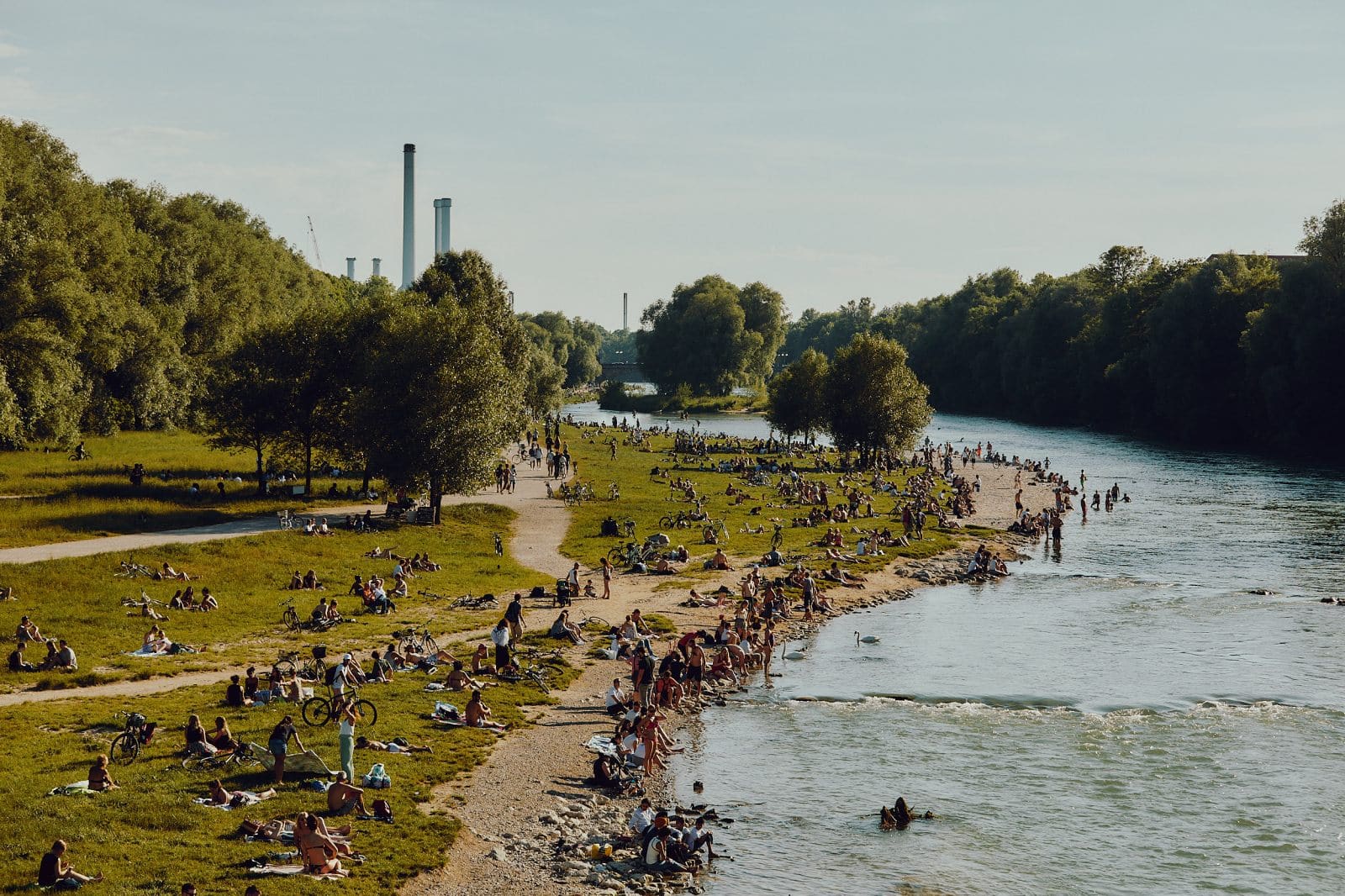
But numbers alone do not explain Munich's appeal. The city succeeds because it has preserved what makes it distinctive while remaining open to change. Public swimming pools maintain standards that rival private gyms. The airport showers are immaculate. The U-Bahn carries elderly women in fur coats alongside students absorbed in their phones, a visible reminder that good public services unite rather than divide. And beyond the city limits, the Bavarian landscape offers immediate escape: the Isar River, the Englischer Garten, Alpine foothills visible on clear days.
Munich also demonstrates that urbanism is not static. A former power station has been converted into an arts venue. Solar power capacity nearly tripled in a single year, supported by incentives for small panels on private balconies. The city evolves without losing coherence, a balance many places struggle to maintain.
The French Exception
Paris topped the rankings in 2025, a recognition that felt both surprising and inevitable. Surprising because the French capital can seem frozen in amber, its boulevards and buildings largely unchanged since the 19th century. Inevitable because that continuity is precisely what makes Paris irreplaceable. The city looks like itself. It refuses to apologize for its beauty or its history. And under Mayor Anne Hidalgo, it has become cleaner, greener, and safer without sacrificing the personality that gives it charm.
The 2024 Olympics offered Paris a global stage, and the city delivered a performance that showcased its contemporary strengths. But the real transformation happened over the preceding decade, through urbanism interventions that were often controversial but ultimately successful. Hidalgo's policies have made the city more livable for residents while maintaining the aesthetic coherence that draws millions of visitors each year.
What sets Paris apart is its refusal to choose between preservation and progress. The avenues still echo with the sound of leather shoes on concrete. The Tuileries remain as they were. Yet the city has become more international, more outward-looking, more engaged with the world beyond France. It is a 21st-century metropolis that happens to look like a 20th-century one, and that temporal layering creates a richness few cities can match.
The Tokyo Model
Tokyo claimed the top position in both 2016 and 2017, and the Japanese capital represents perhaps the most distinctive approach to urban living on this list. Where European cities emphasize public space and collective decision-making, Tokyo operates on unspoken agreements, on norms so deeply internalized that they feel instinctive rather than imposed.
The result is a city where primary school children walk to school alone as a matter of course, where subway passengers would never dream of eating pungent food or putting shoes on seats, where even mildly sullen service provokes outrage. This is not about rigid rules but about a shared understanding that urban life works better when everyone considers others before themselves. The awareness becomes absorbed in childhood, internalized to the point where it requires no conscious effort.
Tokyo also delivers on the practical front in ways other cities only talk about. The metropolis operates around the clock, genuinely 24 hours a day. Haneda Airport never closes. Bookshops open at seven in the morning and close at four the next. Restaurants and convenience stores remain accessible at all hours. This is not merely about nightlife or entertainment; it is about recognizing that modern life does not conform to industrial-era schedules, that people need services when they need them, not when tradition dictates they should.
The city's round-the-clock economy makes it attractive for both residents and visitors, a competitive advantage that other global hubs have been slow to replicate. In an era when cities compete for talent and investment, Tokyo's refusal to shut down represents a significant edge. It signals openness, flexibility, a recognition that urban life should accommodate diverse rhythms rather than enforce a single schedule.
What They Share
Looking across this decade of urban excellence, certain themes recur. The best cities invest heavily in public transport, understanding that mobility is not a luxury but a necessity. They provide access to nature, whether through rivers, parks, or proximity to mountains and lakes. They maintain safety without resorting to visible security theater. They support culture and education, recognizing that intellectual capital matters as much as financial capital. And they foster a sense of community, a belief that residents share responsibility for the collective good.
But perhaps the most important commonality is harder to articulate. These cities all possess what might be called civic imagination: the ability to envision what urban life could be and then to implement that vision over years and decades. They do not chase trends or copy other metropolises. Instead, they cultivate their own identities while remaining open to evolution. They honor history without becoming museums. They embrace modernity without erasing the past.
This requires political will, certainly, but also cultural consensus. Residents must believe that public investment serves the common good, that regulations can enhance rather than restrict freedom, that short-term inconvenience sometimes yields long-term benefit. In polarized times, such consensus feels increasingly rare. Yet the cities that achieve it demonstrate what becomes possible when civic culture aligns with thoughtful governance.
The Lessons for Other Cities
Not every metropolis can replicate Copenhagen's bike infrastructure or Tokyo's 24-hour economy or Munich's access to Alpine landscapes. Geography and history impose constraints. But the underlying principles travel well. Cities can prioritize pedestrians over cars, public space over private development, long-term sustainability over short-term profit. They can invest in education, culture, and social services. They can maintain high standards for public amenities, treating them as expressions of civic pride rather than budget line items to minimize.
What these top-ranking cities prove is that urban quality of life is not an accident. It results from choices, sustained over time, about what kind of place a city wants to be. It requires leaders willing to implement controversial policies, residents willing to support them, and institutions capable of executing ambitious plans. It demands patience, because the best interventions take years to show results, and flexibility, because cities must adapt to changing circumstances without losing sight of core values.
The decade ahead will test these cities in new ways. Climate change will require even more aggressive environmental policies. Demographic shifts will strain housing and social services. Geopolitical instability may disrupt the international flows of talent and capital that many of these places depend on. But if the past ten years offer any guide, the cities that thrive will be those that maintain their commitment to considered urbanism, to collective responsibility, to the belief that great cities are built for people, not just profit.
As we look toward the next generation of urban excellence, the question is not which city will claim the top spot next year, but which places will have the vision and the will to create the conditions for human flourishing. The answer will reveal much about our priorities, our values, and our capacity to imagine cities worthy of the lives lived within them.
Spot something wrong? Email editors@globalchicvoyage.com. We log every correction publicly.
RELATED
SEE ALL →
6 Jul 2026 / 5 min
8 Aug 2026 / 5 min
7 Aug 2026 / 5 min
31 Jul 2026 / 5 min