
Beyond the Beach Club: Twelve Boutique Hotels Redefining Bali in 2026
From volcanic highlands to black-sand coasts, the island's most considered stays are the ones that slow you down—and change how you see the place entirely.
SI
23 May 2026 · 5 MIN READ · UPDATED 17 AUG 2026
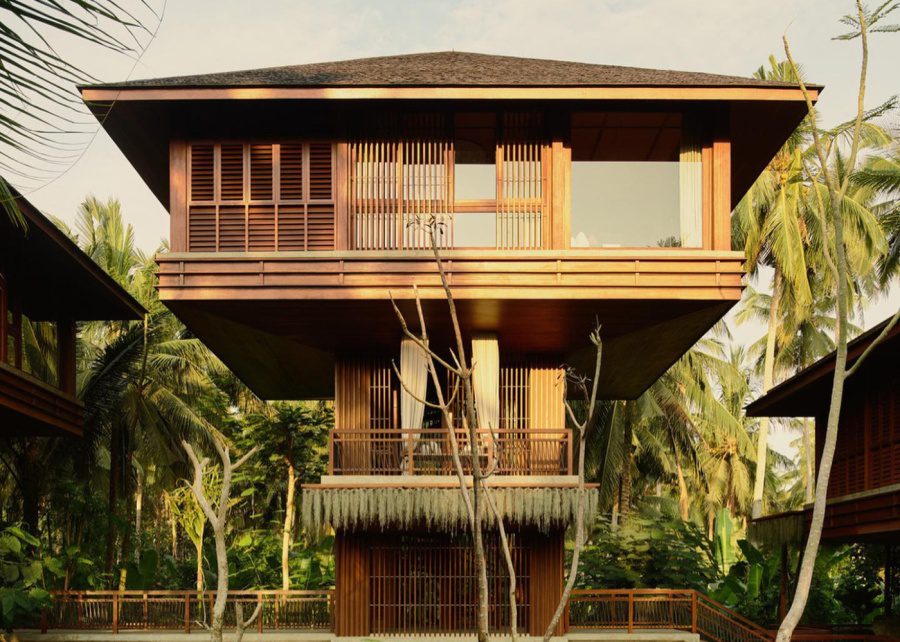
The Morning the Island Went Quiet
I woke before dawn in a bamboo suite suspended over a Sidemen valley, mist pooling in the rice terraces below. No alarm. No poolside DJ. Just the faint scrape of a farmer's hoe against wet earth and the slow unraveling of silence. It was my third morning in Bali, and the first time I understood why travelers keep returning—not for the beach clubs or the Instagram backdrops, but for these pockets of stillness that feel like the island's true inheritance.
At Global Chic Voyage, we've watched Bali's boutique hotel sector evolve from villa rentals with good Wi-Fi into something more considered: properties that root themselves in landscape, culture, and a quieter kind of luxury. The island's most compelling stays in 2026 are not the ones shouting loudest on social media. They are the ones that ask you to slow down, listen, and recalibrate what a holiday might mean.
This year, three properties on the island received MICHELIN Key recognition—a marker of hospitality excellence that underscores a broader shift. Bali's best boutique hotels are no longer competing on size or spectacle. They are competing on intimacy, craft, and the ability to make a guest feel like they have discovered something unrepeatable.
Geography as Character: Where You Stay Changes What You See
Bali is not one place. It is a dozen microclimates stitched together by winding roads and wildly different atmospheres. The jungle-draped highlands of Ubud bear little resemblance to the black-sand coasts of Medewi or the clifftop drama of Uluwatu. And the hotels that thrive in each zone are shaped by their surroundings—not imposed upon them.
In Ubud, design-rich retreats lean into verticality and valley views, using raw concrete, dark timber, and handwoven textiles to echo the forest canopy. Further east, in Sidemen and Candidasa, properties take a softer approach: bamboo pavilions, open-air lounges, and architecture that dissolves into rice paddies or coastline. On the west coast, where tourism thins and black sand replaces white, boutique hotels embrace remoteness as luxury—solar panels, permaculture gardens, communal dining, and the kind of solitude that requires a three-hour drive to earn.
The region you choose dictates the rhythm of your days. Ubud mornings are yoga sessions and waterfall hikes. Uluwatu afternoons are surf checks and clifftop sundowners. And in the northern highlands around Munduk, evenings are spent by fire pits with blankets, watching volcanoes fade into twilight. Geography here is not backdrop—it is character.
The New Intimacy: Estates, Treehouses, and Rooms That Feel Like Secrets
The most memorable properties we encountered this year were the ones that felt like private discoveries. Take The Seed in Candidasa: a beachfront estate with eight bedrooms, a lagoon-style pool, and a treehouse connected by pulley system for hauling cocktails into the canopy. It is not a hotel in the traditional sense—you book the entire property, turning it into a compound for friends, families, or small groups who want to live like benevolent lords of a tiny jungle kingdom.
Inside, the estate unfolds like a series of set pieces: a villa with a living room you can swim beneath, an underground ice bath, a soundproof music room for late-night jam sessions, and a jungle gym built from sustainable materials. The onsite kitchen uses seed-oil-free produce grown within the property's own gardens. It is maximalist in amenities, minimalist in footprint—a paradox that defines much of Bali's evolving boutique sector.
Further west, Lost Lindenberg in Medewi takes the opposite approach. This is a hotel you have to work to reach—three hours from the airport, camouflaged among palm groves on a black-sand beach. The suites are jungle-hugged and nearly invisible from the road. Meals are plant-based and communal. The spa is carved into the forest. Everything runs on solar power, and the permaculace gardens supply much of what appears on your plate. According to MICHELIN, the property merits Key recognition for its seamless integration of sustainability and design. But what struck us most was the silence—the kind that makes you realize how much noise you've been carrying.
In Uluwatu, Grün Resort takes the treehouse concept and refines it with glass, steel, and panoramic sightlines. The two-story Treehouse Villa frames the valley through floor-to-ceiling windows, and the rooftop lounge—La Cima—offers 180-degree views at golden hour. The architecture is modern but deferential, allowing the landscape to dominate. It is eco-conscious without announcing it, which is increasingly the standard among Bali's more thoughtful operators.
Wellness Without the Wellness-Speak
Bali has long been a magnet for the spiritually curious, but the island's wellness offerings have matured beyond juice cleanses and sound baths led by expats with unclear credentials. The best properties now embed wellness into daily rhythm rather than packaging it as upsell.
Soulshine in Ubud—founded by musician Michael Franti and his wife Sara—brands itself as Bali's first sound and wellness resort. The concept is less about rigid detox protocols and more about feel-good programming: live music sessions in the Togetherness Lounge, vinyl record players in every suite, yoga studios that spill into jungle, and a food philosophy summarized as "100% healthy, 90% of the time." It is wellness with a wink, designed for guests who want to feel good without feeling policed.
At Bisma Eight, also in Ubud, wellness is quieter and more architectural. The property—recently awarded a MICHELIN Key—features 38 suites with raw concrete walls, warm wood detailing, and oversized wooden bathtubs that feel like small ceremonies. The infinity pool hovers above the valley, and the onsite spa offers Balinese massage in open-air pavilions. But the real luxury here is space: physical and psychological room to exhale.
In the northern highlands, Munduk Cabins offers a different kind of restoration. The six cabins face sweeping views of volcanoes, jungle, and distant sea. Each Premium Suite includes a private jacuzzi on the deck—essential when evening temperatures drop. Days are spent chasing waterfalls or trekking through nearby villages. Evenings are fire pits, blankets, and locally sourced Indonesian cuisine from Ulekan, a Canggu favorite that opened an outpost here. It is wellness as immersion: no apps, no tracking, just altitude and silence.
Craft, Culture, and the Question of Authenticity
One tension running through Bali's boutique hotel sector is the question of cultural authenticity. How does a property honor Balinese tradition without turning it into theater? The best answers we found were the ones that embedded local craft into architecture and operation—not as ornament, but as structure.
At Samanvaya in Sidemen, an adults-only resort built from bamboo, wood, and local stone, the design language is explicitly regional. Villas are elevated to capture valley views, and interiors reference traditional Balinese spatial logic: open pavilions, natural ventilation, and materials that age gracefully. The resort has doubled in size since its opening, but the original ethos remains intact: build with the landscape, not against it.
Chapung Sebali in Ubud takes a different route, blending Scandinavian minimalism with Balinese materiality. The result is dark timber, stone floors, and clean lines softened by handwoven textiles and jungle sightlines. The onsite pool club, Jungle Fish, is a social hub that attracts day guests, but staying onsite grants early access—a small privilege that underscores the value of residency over visitation.
At Bisma Eight, Balinese craftsmanship is woven into every surface: hand-carved wood panels, locally sourced stone, and textiles produced by regional artisans. The property does not announce its cultural bona fides loudly, but they are legible in every material choice. This is the kind of authenticity that accrues through collaboration, not curation.
Why It Matters: The Boutique Hotel as Cultural Anchor
Bali's boutique hotel sector is not just about accommodation—it is about how tourism itself is evolving across Southeast Asia. As travelers grow weary of homogenized luxury and algorithmic recommendations, they are seeking properties that feel rooted, authored, and specific. The boutique hotel, at its best, functions as a cultural anchor: a place that interprets its surroundings rather than importing a template.
This shift has implications beyond Bali. Across the region—from Vietnam's Central Highlands to the Philippine archipelago—small-scale operators are experimenting with models that prioritize place-based design, local supply chains, and slower forms of hospitality. Bali, with its decades-long head start in boutique tourism, is both laboratory and cautionary tale. The island's challenge is to scale intimacy without diluting it—to grow a hospitality sector that remains personal even as visitor numbers climb.
The properties that will endure are the ones that resist the pressure to become all things to all guests. They are the ones that know what they are—and what they are not. A beachfront estate with a treehouse pulley system. A mountain cabin with a jacuzzi facing a volcano. A sound-and-wellness resort where the founder might join you for an impromptu jam session. These are not hotels trying to be resorts. They are small, deliberate worlds that ask you to enter on their terms.
The Long View: What Boutique Means in 2026
If boutique once meant "small and charming," it now means something closer to "considered and specific." The term has been stretched to include everything from six-room guesthouses to 38-suite resorts, but what unites the best examples is a sense of authorship. Someone made choices here—about materials, scale, programming, and voice—and those choices are legible in every corner.
At Global Chic Voyage, we return to Bali not for its beaches—though they remain beautiful—but for the way its best properties continue to ask difficult questions. How do you build for tourists without erasing locals? How do you scale without losing intimacy? How do you honor tradition without freezing it in amber? The answers are still being written, room by room, valley by valley. But the fact that the questions are being asked at all is reason enough to keep watching.
Spot something wrong? Email editors@globalchicvoyage.com. We log every correction publicly.
RELATED
SEE ALL →
23 Jun 2026 / 5 min
14 Jul 2026 / 5 min
13 Jul 2026 / 5 min
17 Jul 2026 / 5 min