
The Hand Roll Counter That Taught London to Eat With Its Fingers
After four years south of the river, Temaki has moved from Brixton to Mayfair - bringing Californian-inflected Japanese precision and a devoted following with it
SI
21 Jun 2026 · 5 MIN READ · UPDATED 17 AUG 2026
The Journey North
There is something quietly radical about eating sushi with your hands. Not in the transgressive sense - purists will remind you that nigiri was always meant to be finger food - but in the way it collapses formality, the way it asks you to trust the chef's timing more than your own. A hand roll, or temaki, is a contract: the nori must be crisp, the rice still warm, and the interval between counter and mouth measured in seconds, not minutes. It is food that cannot wait.
For four years, Temaki made that case in Brixton, where AM Dupee built a following around a simple premise - pristine fish, vinegared rice, nori rolled to order - and a sensibility borrowed from California, where Japanese technique meets a certain laid-back irreverence. Now the restaurant has migrated north to Mayfair, to a larger space on Maddox Street, and with it comes an expanded menu and a design language that attempts to reconcile minimalism with warmth, precision with ease.
At Global Chic Voyage, we have watched London's hand-roll scene multiply this year - Kumori and Maki Nori in Soho, Saltwater and Miokuru slated for later in the summer - but Temaki remains the template, the original that gave the format its foothold in a city more accustomed to maki platters and omakase marathons. The question, then, is whether the move to Mayfair - a neighborhood not known for its tolerance of the unpolished - will dilute what made the original so compelling, or whether it will simply give more people access to something worth experiencing.
A Space That Breathes
The interior, designed by Thessaloniki-based studio Adamidis, aims for what Dupee calls "modern, relaxed and a little bit Japanese-inspired" - a brief that could easily tip into pastiche but here finds its footing in restraint. Neutral tones, clean lines, oak surfaces: the vocabulary is familiar, but the execution is careful. Texture and artwork provide warmth without clutter; the space does not announce itself so much as recede, allowing the produce - and the theater of its preparation - to occupy the foreground.
Upstairs, a stripped-back wooden counter seats fourteen, with hand rolls passed directly across the oak. It is counter culture in the most literal sense, a format that privileges proximity and ritual. Downstairs, the mood softens into something closer to a listening bar: seating arranged around a central counter, a dry-aging cabinet displaying the raw materials - tuna, scallop, eel - that will eventually be wrapped in nori and handed over. The design does not try to mimic Tokyo or Los Angeles; it borrows from both and settles somewhere in between, a kind of transatlantic minimalism that feels appropriate for a restaurant built on synthesis.
The Format and Its Variations
The word temaki is a compound: te (hand) and maki (roll). The format is believed to have emerged in the 1920s, reportedly inspired by American ice-cream cones - a detail that underscores the form's hybrid origins, its willingness to borrow and adapt. Unlike maki, which is sliced into bite-sized rounds, temaki is a cone of nori filled with rice and fish, meant to be eaten immediately, before the seaweed loses its snap.
At Temaki, the signature roll layers akami, otoro, and caviar - a study in contrasts, lean and fatty tuna crowned with brine. Other fillings range from prawn tempura to baked scallop to barbecued eel, each one a small argument for the format's versatility. The appeal is not complexity but clarity: each ingredient legible, each bite balanced. The set menus that built the restaurant's reputation in Brixton remain central to the experience, offering a curated progression through the menu - a useful entry point for those unfamiliar with the Californian-inflected approach that defines the cooking here.
Beyond the Roll
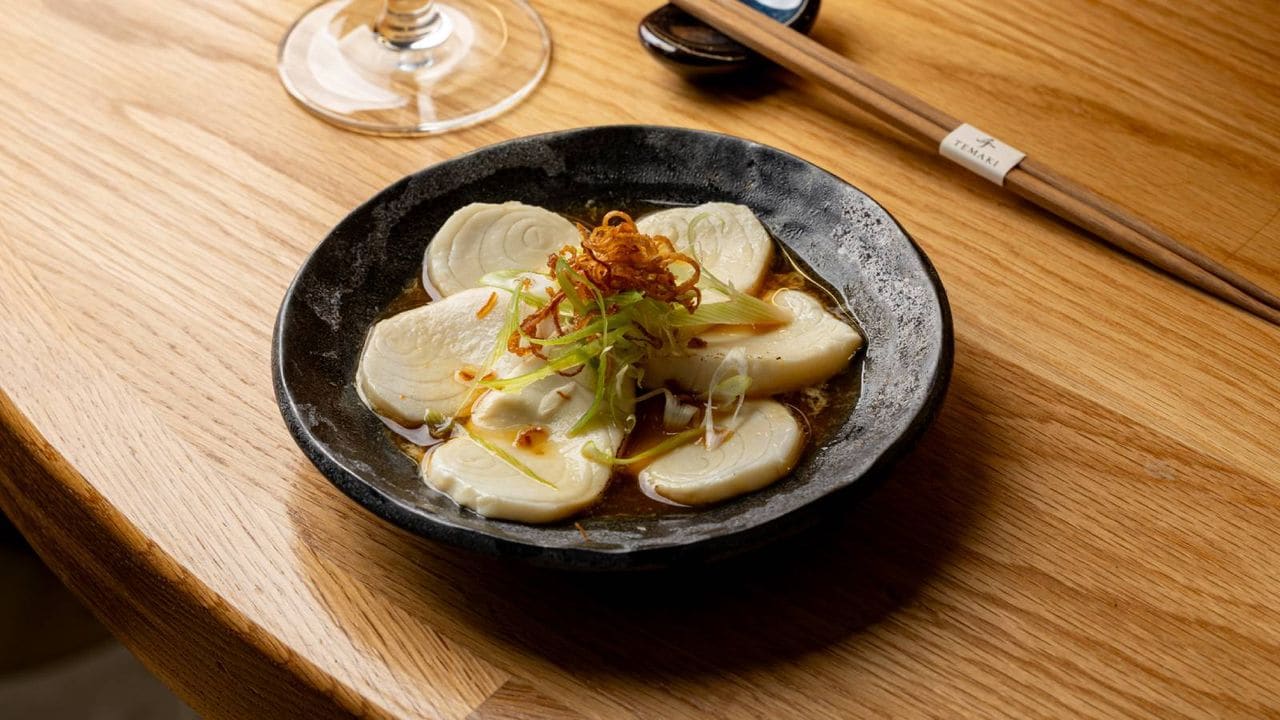
The menu extends beyond hand rolls into a selection of small plates designed for sharing. Yellowtail sashimi arrives thinly sliced, dressed simply; grilled aubergine comes with sesame sauce, the bitterness of char meeting the nuttiness of the dressing. Crispy rice topped with spicy trout offers textural contrast - a nod to the kind of hybrid cooking that defines much of contemporary Japanese dining in California, where technique is preserved but dogma is not.
There is gyoza, which changes daily, and an A4 Wagyu slider for those who want something more substantial - or, as Dupee might put it, for those who insist on eating with their fingers in a different register. The cooking does not aspire to purist omakase; it is looser, more playful, shaped by the same logic that makes hand rolls appealing in the first place: accessibility without compromise, precision without pretension.
The Californian Lens
What Dupee has imported from California is not a specific dish but a posture - a way of approaching Japanese cuisine that values craft but resists rigidity. In Tokyo, sushi is often presented as the culmination of years of training, a form that demands reverence. In Los Angeles, that reverence is tempered by a culture that prizes ease, that sees no contradiction between high technique and casual presentation. Temaki occupies that space: the fish is impeccable, the rice carefully seasoned, but the atmosphere is relaxed, the format informal.
This is not fusion in the usual sense - there are no miso-glazed short ribs, no yuzu aioli - but rather a recalibration of context, a recognition that Japanese cooking can be rigorous without being austere, that a hand roll passed across a counter can be as considered as a twelve-course tasting menu. The move to Mayfair tests that proposition. Brixton allowed for a certain scrappiness, a DIY energy that suited the format. Mayfair, with its higher rents and more transient clientele, demands something more polished. The challenge is to scale without losing the intimacy that made the original work.
Why the Hand Roll Moment Matters
London's sudden appetite for hand rolls is worth noting, not because it signals a seismic shift in dining habits but because it reflects a broader move toward formats that prize speed, transparency, and direct contact between chef and diner. The hand roll is fast food in the best sense: made to order, consumed immediately, dependent on timing rather than tableside theater. It suits a city that has grown weary of long tasting menus and their attendant rituals, a city that wants quality without the performance.
Temaki, in moving to Mayfair, is testing whether that format can hold in a neighborhood better known for white tablecloths and wine lists than for wooden counters and nori cones. The early signs suggest it can. The restaurant is fuller than its Brixton predecessor, the audience broader, but the core offer remains the same: fish rolled to order, handed across oak, eaten before the seaweed softens. It is a simple idea, executed well, and in a dining landscape crowded with concepts that collapse under their own ambition, simplicity executed well is increasingly rare.
The Verdict From the Counter
Sitting at the upstairs counter, watching the chefs work - rice pressed into palms, nori crisped over flame, fish sliced and layered - it is easy to understand why Temaki has inspired imitators. The format is replicable, but the execution is not. The difference between a good hand roll and a mediocre one is a matter of seconds, of temperature, of the ratio of rice to fish to nori. It is a format that rewards attention and punishes carelessness, and Temaki, even in its new and larger incarnation, remains attentive.
The move to Mayfair has brought more space, more seats, more small plates. It has not, so far, brought the kind of dilution that often accompanies expansion. The hand rolls are still passed directly across the counter, still meant to be eaten immediately, still built on the premise that sometimes the best way to eat is with your hands, standing close enough to see the chef's work, trusting the timing, and letting the nori speak for itself.
In a city where Japanese dining has long been synonymous with omakase reverence or high-street convenience, Temaki offers a third path: Californian ease married to Japanese precision, informality that does not sacrifice craft. It is a model that has proven durable enough to survive the journey from Brixton to Mayfair, and if the current wave of hand-roll openings is any indication, it is a model that London is finally ready to embrace.
Spot something wrong? Email editors@globalchicvoyage.com. We log every correction publicly.
RELATED
SEE ALL →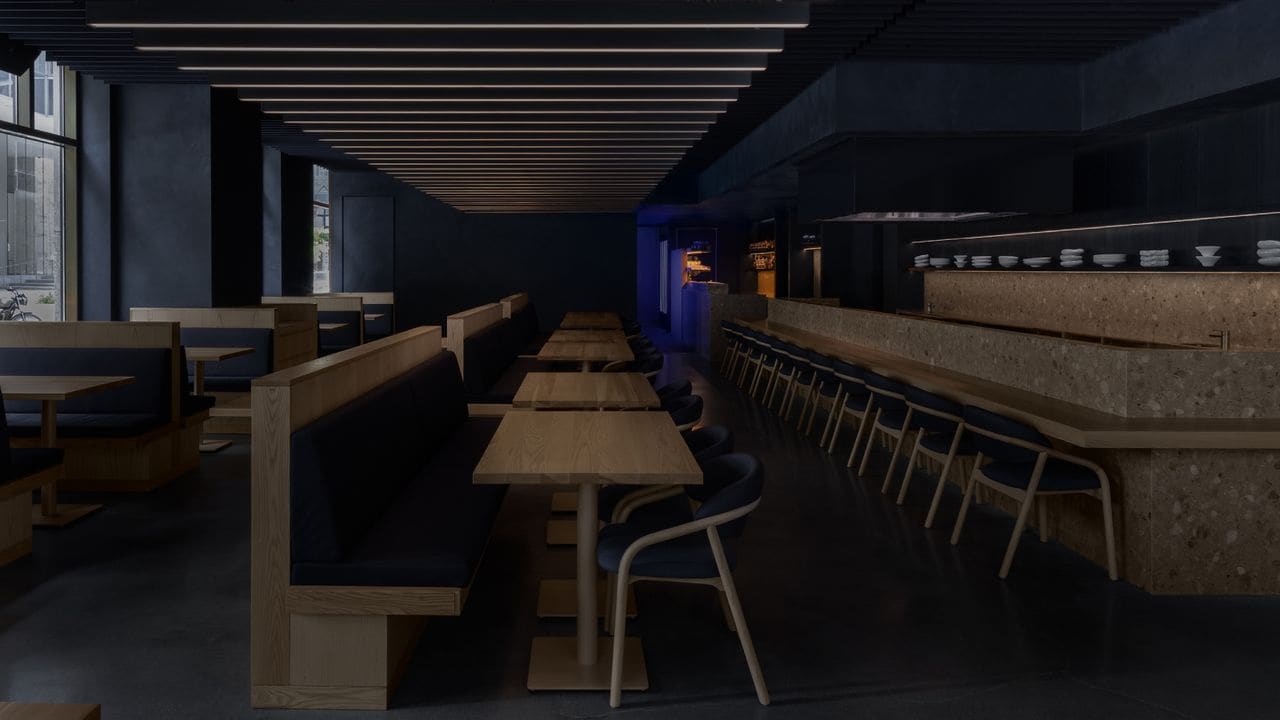
23 Jul 2026 / 5 min
16 Jul 2026 / 5 min
22 Jul 2026 / 5 min
7 Aug 2026 / 5 min