
The Private Island Where Time Slows and Privilege Whispers
Mustique has perfected the art of luxurious seclusion, a Caribbean haven where planning is as much ritual as arrival
SI
29 Jun 2026 · 5 MIN READ · UPDATED 17 AUG 2026
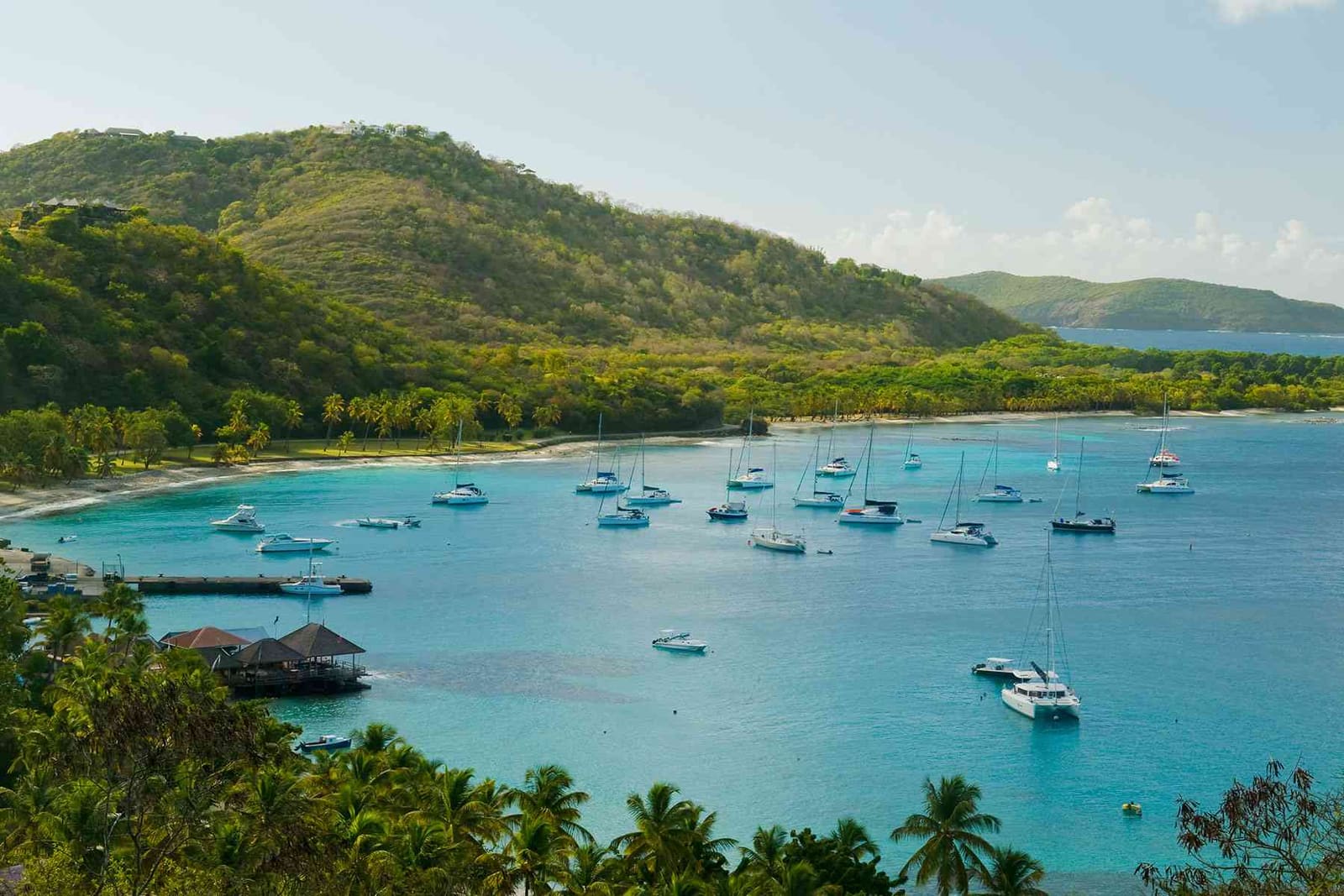
An Island That Guards Its Secrets
There is a particular quality to islands that exist almost entirely by invitation. Mustique, tucked into the southern arc of Saint Vincent and the Grenadines, has cultivated this mystique for decades. No cruise ships anchor offshore. No all-inclusive resorts sprawl along its beaches. Instead, the island operates on a different frequency altogether, one where privacy is currency and discretion is woven into every interaction.
At Global Chic Voyage, we've watched the Caribbean evolve through waves of development, wellness branding, and eco-resort proclamations. Yet Mustique remains curiously immune to trends. Its appeal lies not in reinvention but in constancy: the same powdery stretches of sand, the same unhurried rhythm, the same understanding that true luxury often means being left entirely alone.
Planning a journey here requires a shift in mindset. This is not a destination you stumble upon or book on impulse. It demands intention, a willingness to engage with its particular codes, and an appreciation for the kind of escape that unfolds slowly, without fanfare.
The Architecture of Exclusivity
Mustique's identity was shaped deliberately. The island, spanning roughly 1,400 acres, was transformed in the 1960s from a mosquito-plagued outpost into a private retreat by Colin Tennant, who gifted Princess Margaret a plot of land and set in motion its association with royalty and rock stars. That legacy persists, but what endures more powerfully is the island's commitment to architectural and environmental restraint.
Development here is tightly controlled by the Mustique Company, which oversees everything from villa design to beach maintenance. The result is an island that feels remarkably uncluttered. Villas, many designed by renowned architects, sit discreetly within lush hillsides or along secluded coves. There are no high-rises, no garish signage, no visual pollution of any kind. The aesthetic is deliberately Caribbean colonial meets contemporary minimalism: open-air pavilions, local stone, hardwood louvers that filter trade winds.
This level of curation extends to the guest experience. Most visitors stay in privately owned villas, many of which come with dedicated staff, chefs who tailor menus to your preferences, and grounds that feel like your own personal Eden. It's a model that predates the current wave of villa-rental platforms but feels newly relevant in an era when travelers increasingly seek seclusion over spectacle.
When to Arrive and Why It Matters
Timing a visit to Mustique is less about chasing perfect weather and more about understanding the island's social and natural rhythms. The high season runs from mid-December through April, when the climate is driest and trade winds keep temperatures comfortable. This is also when the island's social calendar comes alive: New Year's Eve parties, the annual Mustique Blues Festival in late January, informal gatherings that feel more like house parties than organized events.
Yet there's something to be said for the shoulder months. May and June offer a quieter cadence before the summer heat intensifies. September and October, though technically within hurricane season, can be surprisingly serene, with fewer visitors and a landscape lush from seasonal rains. The island's infrastructure is resilient, and villa staff are adept at monitoring weather patterns.
We've found that the best visits often align not with peak social season but with your own need for restoration. Mustique rewards those who come not to see and be seen but to genuinely disconnect. The island has a way of recalibrating your internal clock, slowing meals to three-hour affairs, turning afternoon swims into meditative rituals.
Where You Rest Your Head
Accommodation on Mustique falls into two categories: private villas and The Cotton House, the island's sole hotel. The latter, originally an 18th-century cotton warehouse and sugar mill, was redesigned by Oliver Messel in the 1960s and remains a study in tropical elegance. Coral stone walls, antique furniture, and gardens that spill toward Endeavour Bay create an atmosphere that is both grand and intimate.
Staying at The Cotton House offers certain advantages: a central location, access to the hotel's beach club, and the ease of not managing villa staff. But the true Mustique experience, many would argue, lies in renting one of the island's private villas. These range from cozy hillside retreats to sprawling estates with infinity pools, outdoor showers, and views that stretch across the Grenadines.
Each villa tells a different story. Some are modernist statements with floor-to-ceiling glass and sleek lines. Others lean into colonial charm, with wraparound verandas and louvers that catch every breeze. What they share is an attention to detail that borders on obsessive: linens pressed daily, fresh flowers arranged by staff, kitchens stocked with provisions flown in from Barbados or Saint Lucia.
Booking a villa typically involves working with the Mustique Company or specialized agencies that represent owners. It's a process that requires planning, often months in advance for high season. But the payoff is an experience tailored entirely to your rhythm, where meals happen when you want them, where staff anticipate needs before you articulate them, where the only agenda is the one you set.
The Rituals of Island Time
Days on Mustique unfold with a looseness that can feel disorienting at first. There are no scheduled activities, no resort programming, no pressure to optimize your time. Instead, you fall into rhythms dictated by sun and tide.
Mornings might begin with coffee on your terrace, watching frigatebirds circle overhead. Mid-morning, a drive in one of the island's ubiquitous golf carts (the primary mode of transport) to Macaroni Beach, a crescent of white sand framed by turquoise water and sea grape trees. Lunch back at the villa, prepared by your chef: grilled mahi-mahi, local breadfruit, a salad dressed with lime and island herbs.
Afternoons are for reading, swimming, napping in a hammock strung between palms. As the sun lowers, you might wander to Basil's Bar, the island's informal social hub, where rum punches are strong and conversation flows easily among an eclectic mix of villa-renters, yacht crews, and the occasional musician passing through.
Dinner is often at the villa, though The Cotton House offers a more formal option, and Firefly, perched on a hillside, serves contemporary Caribbean cuisine with views across the island. But the real luxury is choice: the ability to dine under stars on your own terrace, to linger over wine without watching a clock, to move through the evening entirely on your own terms.
What the Island Asks of You
Mustique is not for everyone, and it makes no apologies for that. It lacks the cultural density of Havana, the culinary innovation of Lima, the historical weight of Kyoto. What it offers instead is space: physical, temporal, psychological. It's an island that rewards those who can sit comfortably with stillness, who don't need constant stimulation, who understand that sometimes the greatest luxury is having nothing you must do.
There is also an implicit understanding that visitors will respect the island's codes. Photography of other guests is discouraged. Privacy is paramount. The social contract here is built on mutual discretion, a recognition that many come to Mustique precisely because it is a place where they can move through the world without scrutiny.
This ethos extends to environmental stewardship as well. The island has invested in sustainable practices: solar energy, water conservation, coral reef protection. These efforts are less about branding than about preservation, ensuring that the Mustique of decades hence remains recognizable to those who knew it decades ago.
The Journey In and Out
Getting to Mustique requires patience and a willingness to embrace the logistics of island-hopping. Most travelers fly into Barbados, then connect to a chartered flight with Mustique Airways or SVG Air, landing on the island's small airstrip. The flight, roughly 90 minutes in a small prop plane, offers aerial views of the Grenadines: a scatter of green islands in impossibly blue water.
Alternatively, you can fly into Saint Vincent and take a shorter charter or arrange for a yacht transfer. The latter option appeals to those already cruising the region, and Mustique's harbor at Britannia Bay accommodates visiting vessels, though mooring space is limited and must be arranged in advance.
Departure carries its own weight. There's a particular melancholy to leaving Mustique, a sense that you're exiting a bubble where normal rules were temporarily suspended. The transition back to airports, traffic, schedules can feel jarring. We've noticed that the best Mustique visits include a buffer day on either end, time to ease into the island's pace and time to readjust upon leaving.
What Remains When You Leave
Weeks after returning from Mustique, certain sensory memories persist: the sound of tree frogs at dusk, the taste of fresh passion fruit juice at breakfast, the particular quality of afternoon light filtering through palm fronds. But what lingers most is the recalibration, the reminder that luxury is not always about accumulation or experience-collecting.
Mustique succeeds because it understands that for a certain kind of traveler, the ultimate indulgence is permission to do very little, very slowly, in a place of extraordinary beauty. It's a philosophy increasingly rare in a world that equates travel with productivity, that measures trips in Instagram posts and bucket-list checkmarks.
The island will continue to evolve, as all places must. New villas will be built, ownership will change hands, the roster of repeat visitors will shift with generations. But if Mustique remains true to the principles that have defined it, it will continue to offer what it has always offered: a place apart, an interlude, a pocket of the Caribbean where time still moves at the speed of tide and trade wind, where the only itinerary that matters is the one written in sand.
Photo: digihelion / Getty Images
Spot something wrong? Email editors@globalchicvoyage.com. We log every correction publicly.
RELATED
SEE ALL →
29 Jul 2026 / 5 min
27 Jul 2026 / 5 min
27 Jul 2026 / 5 min
27 Jul 2026 / 5 min