
Tracing the Italian Coast From Sicily to Rome
A slow journey through coastal Italy reveals why certain routes endure, from family-run hospitality treasures to ports that still feel like secrets.
SI
14 Jul 2026 · 5 MIN READ · UPDATED 17 AUG 2026
The Route That Refuses to Age
There are certain journeys in Italy that reveal themselves slowly, not through guidebooks or trending hashtags, but through whispered recommendations and careful observation. At Global Chic Voyage, we've watched travelers gravitate toward the same coastal stretch for decades: the sun-bleached arc between Sicily and Rome that holds lesser-known ports, family estates turned hotels, and the kind of seaside glamour that chic Italians have quietly guarded.
This particular route works because it hugs the coastline while constantly shifting character. One day you're navigating Palermo's atmospheric streets, where bakeries hide in monastery gardens. The next, you're sinking into a canopied bed in a former oil tycoon's villa, yellow umbrellas dotting the private shore below. It's a two-week proposition if you let it be, though the structure is forgiving enough to contract or expand based on appetite and budget.
What makes this journey distinct is its refusal to lean on Italy's most photographed destinations. Instead, it threads through the country's middle, that stretch below Tuscany's postcard hills and above the Amalfi Coast's lemon-scented drama. The hotels anchor the experience, many of them part of family-run collections that began in the 1960s when Italian businessmen transformed socialite hangouts into discreet hospitality gems.
Palermo and Its Coastal Neighbors
Palermo delivers the kind of beautiful grit that seduces travelers who crave texture. The city pulses with contradictions: ancient monasteries housing modern bakeries, street-perching wine bars beside white-tablecloth establishments. For accommodations, L'Hôtellerie offers a considered home base, while dining demands attention to I Segreti del Chiostro, a bakery concealed within monastery walls and flower gardens, and Osteria del Vespri for evenings that require linen and candlelight.
The more compelling discovery, though, lies thirty minutes outside the city. Former 19th-century fisheries reimagined as Art Nouveau guesthouses sit directly on beaches, their hand-curated interiors a counterpoint to Palermo's urban intensity. Smaller towns like Castellammare del Golfo reward exploration, their imposing waterfront forts presiding over proper bakeries, fruit sellers, and butchers who still know their customers by name.
Scopello demands a full day. Its tuna museum and cove have attracted attention in recent years, but this is one of those rare places where the reality matches the promise. Access costs under thirty dollars and includes the cove, sunbathing areas, and a café that serves drinks against a backdrop of rocky, sun-bleached drama. It's inconvenient enough to reach that arrival feels like an achievement.
The Practical Ferry North
The overnight ferry from Sicily to Naples solves two problems: time and budget. Departures leave around eight in the evening, arriving at seven the following morning. Booking a few days ahead typically secures passage, with prices ranging from forty dollars for seat-only options to roughly two hundred for a premium cabin with en suite facilities for two travelers.
The experience sits firmly in the practical category rather than the glamorous one. Multiple restaurants, bars, gaming rooms, and even an open-air pool occupy the vessel, but this is transport with amenities rather than an experience unto itself. Still, there's something satisfying about waking in Naples, ready to continue south to north without sacrificing a day to driving.
Amalfi's Quieter Corner
The Amalfi Coast requires no introduction, but it does require strategy. Oversaturation plagues certain towns during high season, making the fishing village of Conca dei Marini a smarter landing point. Here, Monastero Santa Rosa occupies a 17th-century monastery once home to wool-clad nuns who baked cream-filled pastries within its stone walls.
Today, arched ceilings and terraces cascade down the hillside toward the sea, delivering the Amalfi fantasy without the backdrop of proposal photoshoots. The monastery's reimagining preserves character while adding contemporary comfort, a balance that proves increasingly rare along this famous stretch of coast.
The Roman Coast's Storied Estate
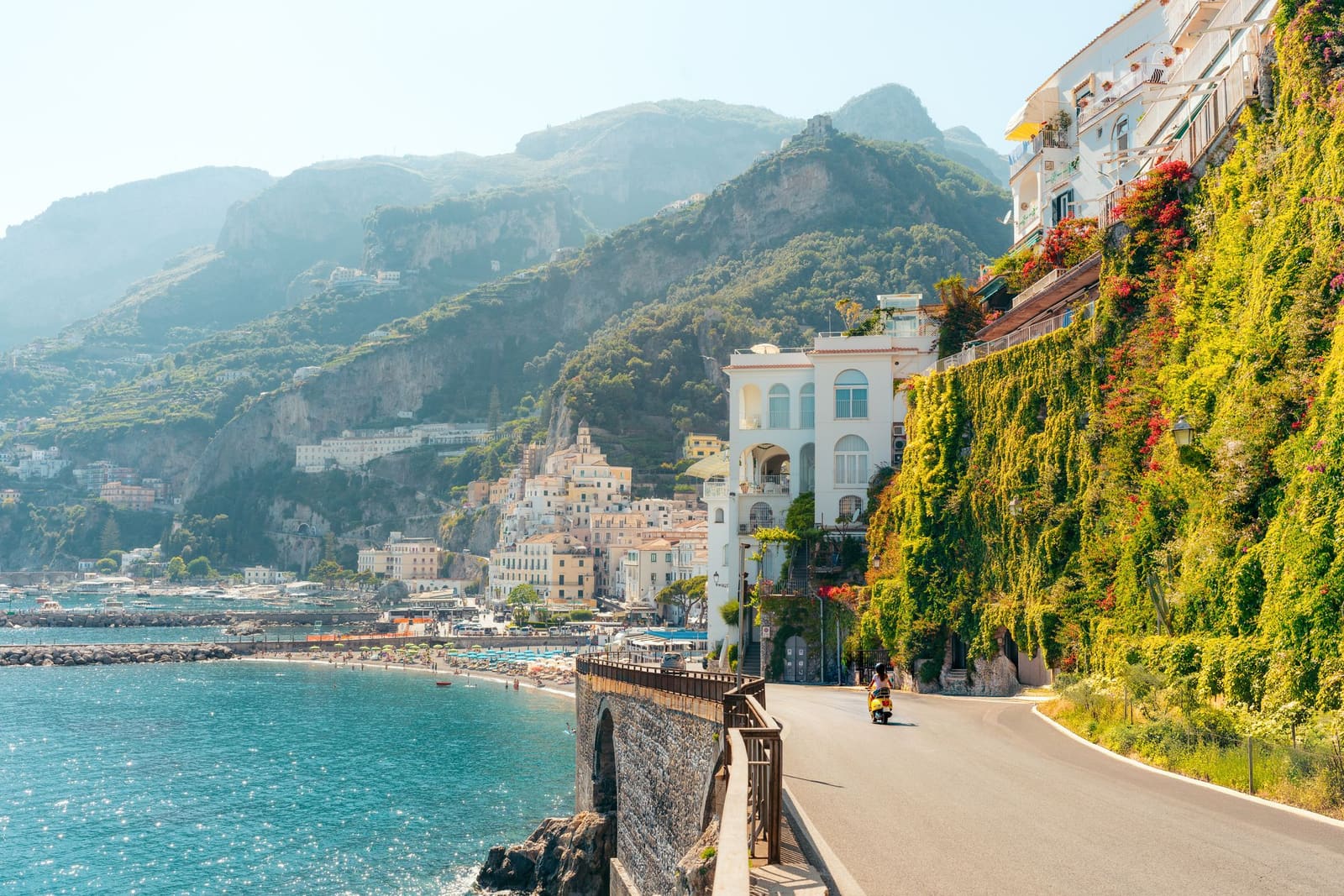
Four hours separate Amalfi from the Roman coast, a drive that rewards those who make the journey part of the point. Sea views unfold around hairpin turns, roadside coffee breaks stretch into lingering lunches, and the particular thrill of Italian road navigation heightens the sense of arrival.
Ladispoli anchors this lesser-known coastal section, an ancient town that even many Italians consider hidden. History enthusiasts can visit the medieval Castello di Odescalchi and Borgo di Ceri, a preserved 13th-century hilltop village where local restaurants cluster around stone walls and narrow streets.
The primary draw, though, is La Posta Vecchia, part of the Il Pellicano family-run hotel collection that began in the 1960s. The estate's iconic yellow umbrellas and vaulted-ceiling indoor pool may already lodge somewhere in your visual memory, but photographs fail to capture its layered history. The property once served as the Roman hideaway of J. Paul Getty, the American oil tycoon and collector of Italian artifacts. When the Sciò family assumed control in the 1970s, many antiques remained in place.
The result feels less like a hotel and more like a grand old house where you've been granted temporary residence. Bookshelves invite browsing, sofas accommodate afternoon reading, and the pretense of always having lived this way settles over guests with surprising ease. Bedrooms are unique and often wonderfully eccentric. One features a patterned canopy above the bed and a giant bathroom with a sunken tub; another showcases a pink marble bath that's become something of a signature.
Most time gets spent poolside, where waiters in smart red jackets serve coffee in pink Ginori cups and breakfast arrives on silver platters. The boutique scale ensures the property never feels crowded, and during many visits, most guests are Italian. This is la dolce vita in hotel form, bucket-list material that justifies the journey.
Porto Ercole's Enduring Texture
Just over an hour by train from Ladispoli, Porto Ercole maintains the texture that travelers hope to find in famous Italian ports but often don't. Independent stores still dominate: warehouse-style fishmongers where fresh catches get deboned in full view, pasta workshops with ribbons of tagliatelle hanging in windows.
Accommodations here span from the original Il Pellicano property that launched the family collection to La Roqqa, a five-star contemporary option that cuts into the hillside with sleek balconies and sharp lines in deep terracotta. Inside, design classics receive proper investment, from 1960s Arco floor lamps to 1930s Utrecht armchairs by Cassina.
La Roqqa's rooftop bar deserves particular attention. The port view induces pure bliss, while the cocktail menu takes inspiration from Caravaggio, the 16th-century artist who died in Porto Ercole. Mixologists have crafted drinks based on his dark, dramatic paintings, using local ingredients and Italian flavors to create a menu that competes with the vista. Their interpretation of a negroni alone justifies the climb.
Walking the Caravaggio way, which terminates at the artist's grave overlooking the bay, provides context for the town's artistic legacy. The path winds through residential areas before opening onto sweeping water views, a reminder that Porto Ercole's appeal extends beyond its picturesque harbor.
Rome's Evolving Hotel Scene
Under ninety minutes by train separates Porto Ercole from Rome, making the capital an elegant bookend to the coastal journey. The city's hotel scene has pulsed with energy in recent years, a string of impressive openings reshaping what Roman hospitality can offer.
La Minerva, the first property opened by the Orient Express group, marries style, glamour, and modernity in ways that defy expectations for a train-affiliated brand. Rich-toned polished wood, shell-shaped bathroom basins, and luggage racks that nod to train nostalgia fill rooms, while a stunning statue of Minerva herself anchors the dining room. The design gleams with contemporary comfort while referencing the world-famous train's history.
Palazzo Talìa offers a different aesthetic entirely. Designed by Italian film director Luca Guadagnino, the hotel layers color-blocked furniture and graphic carpeting against a 16th-century Renaissance building that once served as a religious meeting place, then a school. The effect is a sugar rush for aesthetes, particularly in the shimmering bar where reflective walls amplify the centuries-old fresco above.
Why Certain Routes Endure
Italy's particular genius lies in its regional diversity. The north offers something entirely distinct from the south, while Rome anchors the center as cities like Florence, Milan, and Venice assert themselves as fashion, culture, and art capitals. No country does undiscovered hospitality gems quite like Italy, and no region guards its secrets quite as carefully as the coastal stretch between Sicily and Rome.
This route endures because it balances accessibility with exclusivity. The journey follows a straightforward coastal path while constantly shifting scenery and character. It accommodates both blow-out budgets and more modest approaches, allowing travelers to splurge on certain stays while economizing on transport and meals.
At Global Chic Voyage, we've observed that the most compelling travel experiences rarely require reinvention. They simply need travelers willing to look beyond the obvious, to trade postcard-perfect Positano for the fishing village of Conca dei Marini, to choose Porto Ercole over Portofino, to understand that sometimes the best Italian holiday isn't the one everyone talks about but the one chic Italians have been quietly enjoying all along.
The ferry snacks and train rides, the hairpin coastal drives and poolside afternoons in former tycoon estates, the rooftop negronis and monastery breakfasts all accumulate into something greater than their individual parts. They become the kind of journey you'll reference for years, the route you'll whisper to friends who ask where they should really go in Italy, the trip that makes you fall more deeply in love with a country that somehow always has more to reveal.
Photo: Getty Images
Spot something wrong? Email editors@globalchicvoyage.com. We log every correction publicly.
RELATED
SEE ALL →24 Jul 2026 / 5 min
15 Jul 2026 / 5 min
9 Jul 2026 / 5 min
24 Mar 2026 / 5 min