
The Wicked City That Sank Beneath the Caribbean
Port Royal, once the most notorious harbor in the New World, now rests on the seafloor - a UNESCO site where pirate legends and preservation meet.
SI
28 Jul 2026 · 5 MIN READ · UPDATED 17 AUG 2026
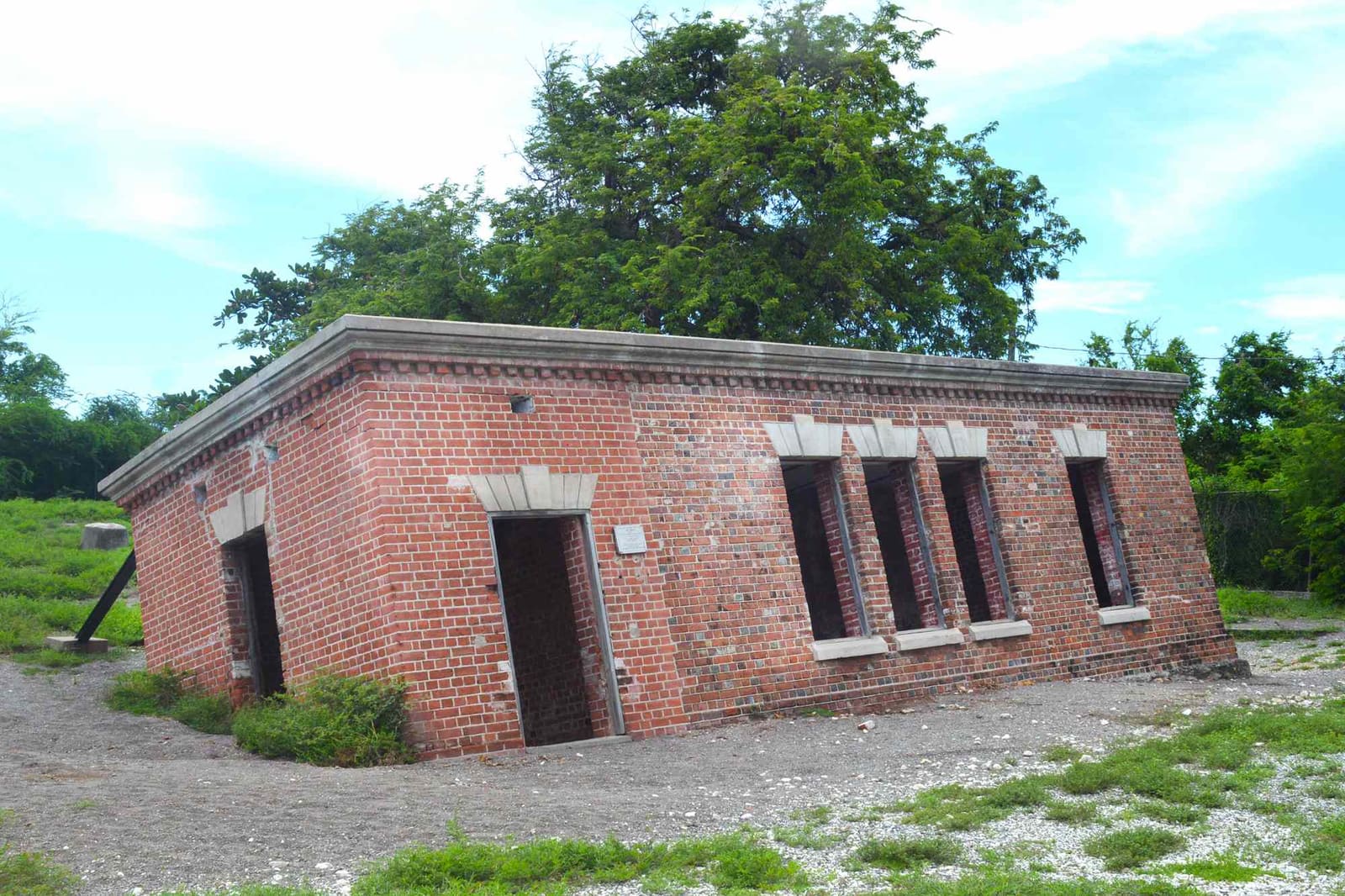
A Harbor of Infamy
There are places where history refuses to stay buried, where the weight of reputation alone seems to anchor a city to the ocean floor. Port Royal is one of them. Long before it became a UNESCO World Heritage Site, this Jamaican settlement carried a moniker that spoke volumes about its character: the Wickedest City on Earth. The name was not hyperbole. In the late seventeenth century, Port Royal teemed with privateers, smugglers, and buccaneers who turned its wharves into a marketplace for plunder and its taverns into theaters of excess. At Global Chic Voyage, we've traced the contours of countless vanished civilizations, but few wear their moral ambiguity as openly as this sunken harbor.
The city's location made it indispensable. Positioned at the mouth of Kingston Harbour, Port Royal offered a natural deepwater anchorage that could shelter entire fleets. Spanish galleons laden with silver from the Americas passed within sight, and the English colonial administration, eager to protect its Caribbean foothold, turned a blind eye to the methods by which Port Royal's residents secured their wealth. Pirates became privateers with the stroke of a pen, and the line between sanctioned naval action and outright theft grew thin enough to vanish entirely.
The Architecture of Vice
What made Port Royal exceptional was not merely its tolerance for piracy but the infrastructure it built around that tolerance. Brick townhouses rose along crowded streets, their cellars stocked with rum and their upper floors given over to gambling dens and brothels. Merchants traded stolen goods alongside legitimate cargo, and goldsmiths melted down Spanish doubloons without asking uncomfortable questions. The city's population swelled to rival Boston's, a remarkable feat for a settlement perched on a narrow spit of sand.
The wealth was staggering. Contemporary accounts describe streets where a man could spend a thousand pieces of eight in a single night, where silk and velvet were as common as canvas, and where the clatter of dice and the clink of coin formed a constant backdrop. Port Royal did not merely permit vice - it monetized it, taxed it, and built civic institutions on the proceeds. Churches stood alongside taverns, a paradox that captured the city's contradictions.
The Day the Sea Reclaimed Its Own
On June 7, 1692, the reckoning arrived in the form of an earthquake. The tremor lasted less than three minutes, but it was enough to liquefy the sandy soil beneath Port Royal's foundations. Buildings that had stood for decades slid into the harbor. Entire streets disappeared beneath the waves. The sea surged inward, swallowing wharves, warehouses, and the people caught within them. Contemporary estimates place the death toll in the thousands, though precise numbers remain elusive. The survivors spoke of the ground opening like a mouth, of water rising faster than a man could run, of a city that simply ceased to exist.
What remained was a drowned ghost, its streets and structures preserved beneath the Caribbean. The disaster was widely interpreted as divine judgment, a narrative that Port Royal's detractors embraced with enthusiasm. Preachers across the Atlantic world cited the city's destruction as proof that moral decay invited celestial wrath. Whether or not one subscribes to that interpretation, the event effectively ended Port Royal's dominance. Kingston, across the harbor, rose to take its place, and the old pirate haven settled into obscurity.
Beneath the Surface
For centuries, Port Royal lay undisturbed, a curiosity mentioned in maritime histories but largely forgotten by the wider world. That changed in the mid-twentieth century, when underwater archaeologists began systematic exploration of the site. What they found was extraordinary: a city frozen in time, its buildings, artifacts, and even organic materials preserved by the anaerobic conditions of the seafloor. Wooden timbers that would have rotted away on land remained intact. Pewter plates still sat on tables. A pocket watch stopped at the moment of the quake.
UNESCO recognized Port Royal as a World Heritage Site, acknowledging both its historical significance and the fragility of its submerged remains. The designation brought international attention and, crucially, funding for ongoing preservation efforts. Divers and researchers continue to document the site, piecing together the daily rhythms of a city that lived fast and died suddenly.
Visiting the Legend
Modern Port Royal is a small fishing village, a shadow of its former self in both size and notoriety. Yet the echoes of its past linger. The Royal Naval Dockyard, built atop the ruins of the old city, offers a tangible link to the colonial era. Fort Charles, one of the few structures to survive the earthquake, still stands guard over the harbor entrance, its cannons aimed seaward. The adjacent museum houses artifacts recovered from the submerged city - clay pipes, navigational instruments, fragments of porcelain - each item a silent testament to lives interrupted.
For those willing to venture underwater, licensed dive operators offer guided tours of the submerged sections. The visibility varies with the season, and the site's protected status means access is carefully regulated. What divers encounter is not a dramatic Atlantis of intact buildings but rather a scatter field of foundations, ballast stones, and the occasional wall poking through the sediment. The real treasure is context: the knowledge that you are hovering over streets where Henry Morgan once walked, where fortunes changed hands in a single card game, where an entire way of life vanished in the time it takes to boil water for tea.
The Ethics of Memory
Port Royal poses uncomfortable questions about how we remember places built on exploitation. The wealth that flowed through its port was stolen, often violently, from Spanish colonies that had themselves extracted it through forced labor. The pirates who made Port Royal infamous were, depending on one's perspective, either swashbuckling rogues or brutal criminals. The city's destruction can be read as tragedy or as justice, and both readings carry weight.
At Global Chic Voyage, we believe that acknowledging complexity is part of responsible travel. Port Royal's UNESCO designation does not sanitize its history; rather, it preserves that history in all its moral ambiguity. The site invites reflection on the cycles of boom and collapse, on the impermanence of even the most audacious human enterprises, on the ways geography and opportunity can converge to create something both magnificent and monstrous.
Where Legends Go to Rest
The Caribbean is full of places where the past feels present, where colonial architecture and Creole culture coexist in uneasy harmony. Port Royal is unique because its past is literally submerged, accessible only to those willing to descend below the waterline. The city's infamy has outlasted the city itself, a reputation that endures even as the physical evidence slowly surrenders to entropy.
For the traveler seeking more than sun and sand, Port Royal offers a narrative of consequence. It is a reminder that cities, like people, are shaped by the choices they make, and that the sea is patient enough to wait for those choices to catch up with their makers. The wickedest city on Earth is gone, but its bones remain, a UNESCO-protected lesson in hubris, history, and the tides that erase both.
Credit: Jamaica Tourist Board
Spot something wrong? Email editors@globalchicvoyage.com. We log every correction publicly.
RELATED
SEE ALL →
29 Jul 2026 / 5 min
8 Aug 2026 / 5 min
7 Aug 2026 / 5 min
31 Jul 2026 / 5 min