
The Yacht That Whispers Across the Mediterranean
Pioneer Yachts' debut vessel marries German engineering rigour with Italian design fluency—and asks whether the future of yachting might hum rather than roar.
AM
14 Jun 2026 · 5 MIN READ · UPDATED 17 AUG 2026
A Silence on the Water
There is a particular quality to mornings on the Mediterranean when the wind has not yet risen—an unbroken stillness that makes even the slightest sound carry across the water. It is in this quietude that a new kind of vessel is preparing to make its entrance. Not with the diesel growl that has long been the soundtrack of yachting, but with something closer to a whisper. At Global Chic Voyage, we've watched the marine industry inch toward electrification with a mix of ambition and hesitation, hybrid propulsion systems grafted onto traditional hulls like afterthoughts. What arrives this summer from a German shipyard called Pioneer Yachts feels different—a vessel conceived from the keel up around the idea that silence, efficiency, and autonomy need not be concessions, but defining characteristics.
The first unit of the PY60, christened Pioneer One, will touch water in July before making its formal debut at the Cannes Yachting Festival in September. It is the inaugural project of engineer and entrepreneur Mike Frank, who founded Pioneer Yachts earlier this year with a singular objective: to create a solar-electric yacht capable of continuous use at sea, not as a gimmick or a greenwashing exercise, but as a practical, elegant alternative to the combustion-driven status quo. The result is a sixty-foot catamaran that balances the precision of German engineering with the sensory refinement of Italian design—a vessel that asks whether the future of luxury on water might look less like a floating mansion and more like a piece of finely calibrated architecture.
Form Follows Energy
The hull and superstructure of the PY60 were not designed and then electrified; they were engineered around the propulsion system itself. This inversion of the traditional design hierarchy is subtle but significant. Where many electric conversions treat batteries and solar panels as add-ons, Pioneer Yachts began with energy generation and storage as the core logic, shaping every other decision—hull form, weight distribution, materials, even the sweep of the roofline—around those imperatives.
The exterior was penned by Cossutti & Ganz, an Italian studio known for performance sailing yachts, while the interior came from Micheletti + Partners, whose portfolio spans superyachts and bespoke residential projects. The collaboration yields a vessel that reads as coherent rather than composite: clean lines, expansive glazing, and a solar roof that does not announce itself as technology but integrates as form. The roof itself is blanketed in photovoltaic panels, generating energy that flows into onboard battery banks and powers both the electric propulsion system and the hotel load—the lights, galley, climate control, and navigation systems that constitute the daily life of a yacht.
According to Pioneer Yachts, the vessel operates on a 48-volt electrical backbone designed to support extended periods at sea. For what the yard describes as "typical cruising distances," the catamaran can run purely on stored solar energy, though diesel generators remain onboard as backup should conditions demand additional power. It is a pragmatic hybrid approach, one that acknowledges the realities of marine life without abandoning the ambition of emissions-free operation.
The Architecture of Autonomy
Performance figures for the PY60 reflect a philosophy that prioritizes range and reliability over speed. The catamaran reaches a top speed of eleven knots and cruises comfortably at seven and a half—speeds that feel leisurely by contemporary standards but align with the rhythms of long-distance cruising. The twin-hull configuration, inherently stable and fuel-efficient, complements the electric powertrain, reducing energy consumption while improving onboard comfort. There is no engine vibration, no exhaust fumes drifting across the aft deck, no mechanical thrum underfoot. The experience, one imagines, is closer to sailing than to motoring, even when the sails are furled.
Simplified onboard systems and intuitive controls mean that the owner can operate the yacht without a professional crew—a deliberate design choice that reflects a broader shift in how luxury is understood. Where traditional superyachts demand hierarchies of staff and complex mechanical knowledge, the PY60 is calibrated for self-sufficiency. It is a vessel for those who want to be participants rather than passengers, who find satisfaction in understanding the systems that carry them rather than delegating that understanding to others.
The interior layout reinforces this ethos. What Pioneer Yachts claims is the largest cockpit door in the sixty-foot class creates a near-seamless transition between the aft deck and the salon, erasing the boundary between inside and out. The single-level living area is flooded with light from panoramic windows, a design move that transforms the interior into a viewing platform as much as a living space. It is an aesthetic borrowed from contemporary architecture—the idea that a room's value lies not in its ornamentation but in its relationship to the landscape beyond.
The Quiet Revolution
We have written before about the sensory qualities of travel—the way a journey is shaped not only by destinations but by the textures, sounds, and rhythms of movement itself. Electric propulsion, at its best, offers a fundamentally different experience of being on the water. The absence of engine noise allows other sounds to emerge: the lap of waves against the hull, the creak of rigging, the distant call of seabirds. It restores a kind of intimacy with the environment that has been lost in the era of high-speed powerboats and diesel megayachts.
Pioneer One will be on display at the Cannes Yachting Festival from September eighth through the thirteenth, where it will be scrutinized by brokers, buyers, and journalists eager to assess whether the promise of solar-electric cruising can be made real. But the vessel's true audience may not be the industry insiders who populate trade shows. It may instead be the owners—current and future—who are beginning to ask different questions about what luxury means, who are less interested in how fast a yacht can go than in how quietly it can move, how lightly it can rest on the water, how seamlessly it can integrate into the rhythms of the natural world.
At Global Chic Voyage, we remain cautious optimists when it comes to electrification in the marine sector. The technology is maturing, but the infrastructure—charging networks, service expertise, resale markets—lags behind. What makes the PY60 compelling is not that it solves every problem, but that it takes the question seriously. It begins with the assumption that solar-electric propulsion is not a novelty but a viable foundation for serious cruising, and it builds from there. Whether that assumption holds will depend on the experiences of the owners who come next, the miles they log, the routes they choose, the silence they come to value or miss. For now, the vessel is a proposition, elegant and considered, waiting to be tested against the open sea.
A Platform for Learning
Frank's decision to use Pioneer One as a personal vessel and a testing ground is perhaps the most revealing detail. It suggests a shipyard willing to iterate, to learn from its own product in real time rather than simply handing it off to clients and moving on to the next commission. This approach is more common in the technology sector than in traditional yacht building, where custom projects are often one-offs, their performance data siloed or proprietary. By treating the inaugural hull as a living prototype, Pioneer Yachts positions itself not as a manufacturer of finished objects but as a developer of evolving systems.
The implications extend beyond this single vessel. If the PY60 proves itself in the field—if it delivers on range, if the solar roof generates sufficient power, if the simplified systems prove intuitive and reliable—then it becomes a platform that can be refined, scaled, adapted. Future models might stretch to seventy or eighty feet, might incorporate more advanced battery chemistries, might push the boundaries of what solar-electric propulsion can achieve. But that future depends on the present: on the data gathered from Pioneer One, on the feedback from early adopters, on the willingness to treat the first hull not as a final statement but as the opening line of a longer conversation.
In an industry often dominated by heritage brands and established hierarchies, the emergence of a new German shipyard with a clear technological thesis is worth noting. Pioneer Yachts does not have the legacy of a Lürssen or a Feadship, but it has something else: a focused vision and the engineering discipline to execute it. Whether that vision resonates with the market—whether buyers are ready to embrace solar-electric catamarans as serious cruising vessels—remains to be seen. But the vessel itself is already an argument, rendered in fiberglass and photovoltaic cells, about what the future of yachting might sound like. Or rather, what it might not.
Spot something wrong? Email editors@globalchicvoyage.com. We log every correction publicly.
RELATED
SEE ALL →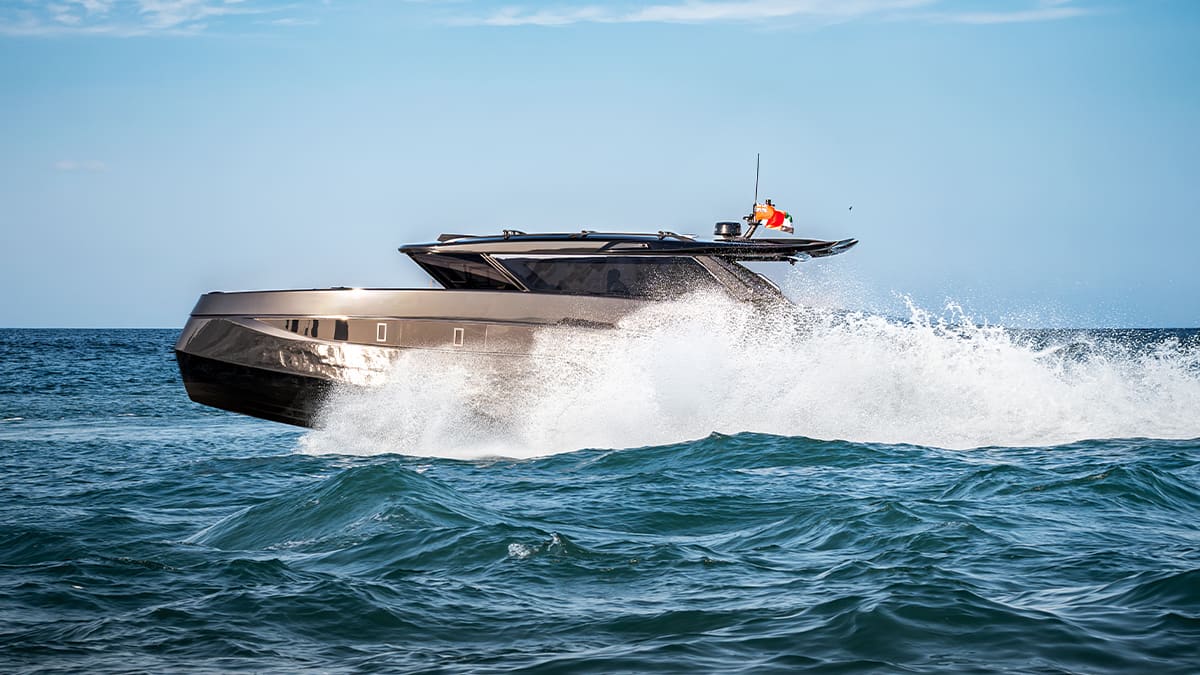
29 Jul 2026 / 5 min

8 Aug 2026 / 5 min

7 Aug 2026 / 5 min

31 Jul 2026 / 5 min