
What Lies Beyond the Neon: Las Vegas Through the Eyes of Those Who Know It Best
The city's residents reveal a world far richer than the Strip's glittering promise - where desert stillness meets culinary ambition, and indulgence takes forms both expected and entirely surprising.
SI
27 Jun 2026 · 5 MIN READ · UPDATED 17 AUG 2026
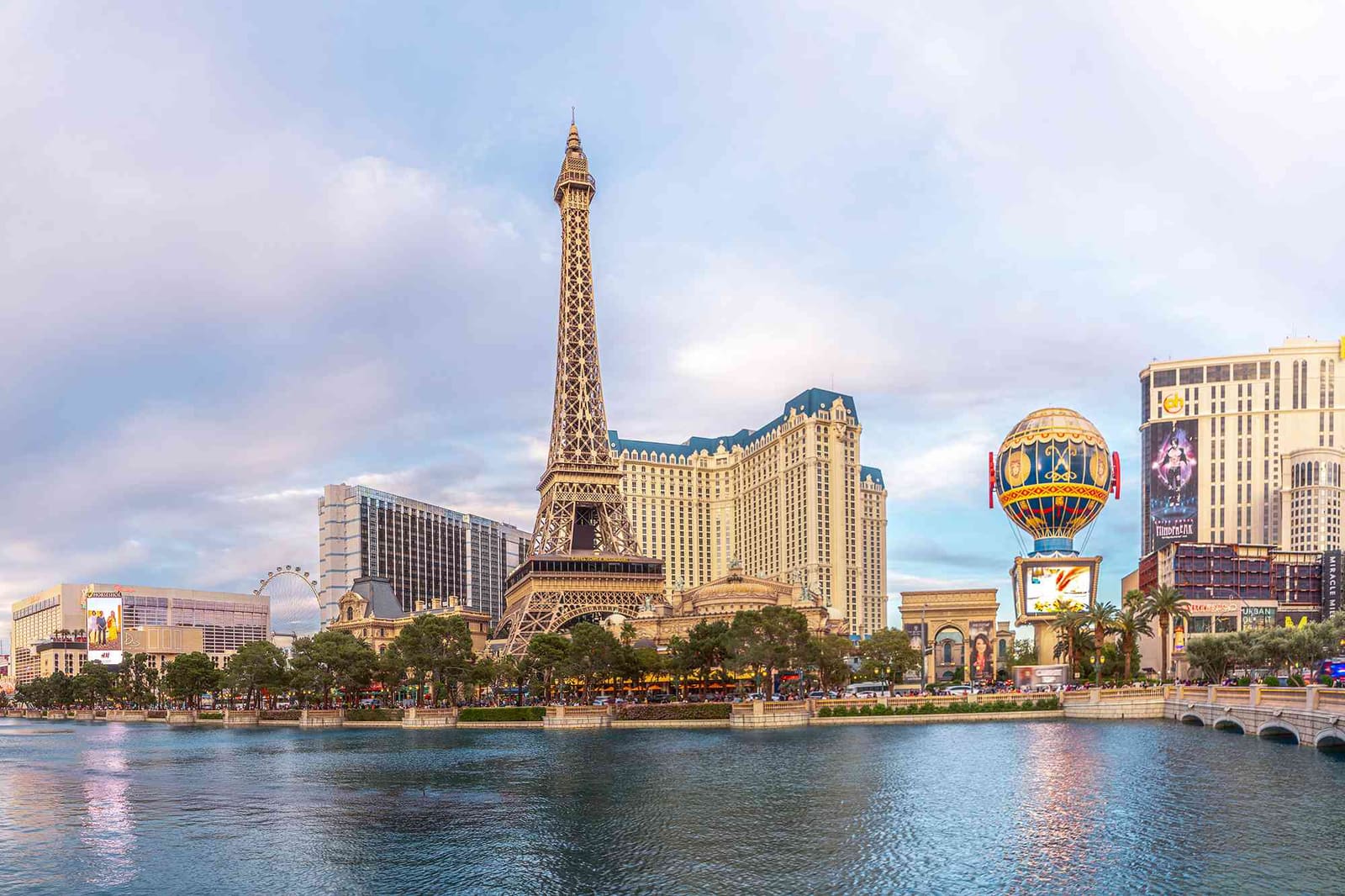
A City Misunderstood
There is a particular quality to the light in Las Vegas just before dawn, when the neon has dimmed but the sun has not yet claimed the desert sky. In that blue hour, the city reveals itself differently - not as the relentless carnival of popular imagination, but as something more layered, more considered. At Global Chic Voyage, we've watched this transformation unfold over years of return visits, guided not by tour operators but by the people who have chosen to make their lives here, among the Joshua trees and the artifice.
The common narrative positions Las Vegas as a single-note destination, a gambling mecca where excess is both product and performance. Yet those who call the valley home speak of an entirely different geography - one mapped not by casino floors but by chef-driven dining rooms, by spa sanctuaries that rival anything in Baden-Baden or Bali, by hiking trails that thread through red rock canyons just minutes from the haute couture boutiques of Crystals. This is the Las Vegas that exists in parallel to the one most visitors know, and it is, in many ways, the more compelling of the two.
The Culinary Revolution That Reshaped the Desert
Fifteen years ago, the city's dining landscape was dominated by celebrity-chef outposts and steakhouse formulae - excellent in execution, perhaps, but rarely surprising. What has emerged since is something more ambitious: a generation of chefs who have moved to Las Vegas not for the celebrity platform but for the creative latitude the city affords. The economics of resort backing combined with an audience willing to experiment has created conditions unlike anywhere else in North America.
Locals will guide you away from the marquee names and toward kitchens where the work is quieter but no less serious. There are intimate omakase counters tucked into off-Strip developments, where the fish is flown in daily and the chef knows your name by the third visit. There are modern Korean restaurants where banchan arrives in waves and the grill work rivals anything in Seoul's Gangnam district. There are natural wine bars in the Arts District, housed in converted warehouses, where the list runs deep into skin-contact whites and low-intervention reds from the Jura and the Finger Lakes.
The city's culinary ambition extends beyond the plate. Several restaurants have built programs around regional ingredients - desert botanicals, Mojave-raised lamb, produce from the surprisingly fertile farms north of the valley. This is not farm-to-table as marketing language but as genuine exploration of what it means to cook in this particular corner of the American West.
Luxury Redefined: The New Generation of Resorts
The resorts that opened in the past decade represent a marked departure from the gilded maximalism that once defined Las Vegas hospitality. At Global Chic Voyage, we've noted a shift toward restraint - or at least toward a more carefully calibrated version of opulence. The newest properties borrow liberally from the design languages of Tokyo and Scandinavia: clean lines, natural materials, spaces that breathe.
What locals appreciate about these properties is not the thread count or the square footage of the suites, though both are considerable. It is the attention to the tertiary details - the quality of the coffee program, the curation of the art collection, the fact that the lobby does not assault you with slot machine chimes the moment you cross the threshold. These are hotels designed for people who might actually want to stay in them, not merely pass through on the way to the casino floor.
The luxury here is also one of access. Several resorts have developed partnerships with local cultural institutions, offering curated experiences that extend beyond the property: private tours of the Neon Museum after hours, guided hikes in Red Rock Canyon with naturalists who can name every species of cactus, helicopter departures to lesser-known corners of the Grand Canyon. This is the infrastructure of privilege, certainly, but it is also an acknowledgment that the city's visitors - at least a meaningful subset of them - are seeking something beyond the tables and the shows.
Wellness in the Mojave: Spas That Transcend the Expected
If there is a single category in which Las Vegas has quietly achieved world-class status, it is in the realm of wellness and spa. The city now boasts facilities that rival the great thermal destinations of Europe, with hydrotherapy circuits, halotherapy chambers, and treatment menus that draw from traditions as varied as Ayurveda, Traditional Chinese Medicine, and cutting-edge cryotherapy.
Locals speak of these spas not as occasional indulgences but as regular practices - places they return to weekly, monthly, seasonally. The best of them understand wellness as something holistic, encompassing not only massage and facial treatments but also movement, nutrition, and the kind of deep rest that is increasingly difficult to come by in contemporary life. There are facilities with meditation gardens that overlook the Spring Mountains, with infinity pools that seem to dissolve into the desert horizon, with treatment rooms where the only sound is the distant call of a Gambel's quail.
What distinguishes the Las Vegas spa experience is the scale and the ambition. These are not modest day spas but sprawling wellness complexes, often spanning multiple floors, offering everything from traditional hammam rituals to biohacking consultations. The investment in these facilities reflects a broader understanding: that the future of luxury hospitality lies not in the casino but in the promise of restoration, of returning guests to themselves in better condition than they arrived.
The Landscape Beyond: Outdoor Pursuits in Proximity
Perhaps the most overlooked aspect of Las Vegas, at least among those who have never ventured beyond the Strip, is its immediate access to some of the American West's most dramatic landscapes. Red Rock Canyon lies twenty minutes from the resort corridor. Lake Mead, with its stark beauty and surprising recreational opportunities, is thirty. The Valley of Fire, with its Aztec sandstone formations glowing improbable shades of crimson and tangerine, is an hour's drive.
Residents have woven these landscapes into their routines. Weekend mornings begin with trail runs through Calico Basin or rock-climbing sessions on the Technicolor Wall. Afternoons might involve paddleboarding on Lake Las Vegas or mountain biking the trails around Bootleg Canyon in nearby Boulder City. These are not activities marketed to tourists with any consistency, yet they represent the daily texture of life for a significant portion of the local population.
At Global Chic Voyage, we have long argued that a destination reveals its true character not in its monuments but in its margins - in the spaces where residents go to escape, to restore, to remember why they chose to live there in the first place. In Las Vegas, those spaces are geological, ancient, utterly indifferent to the human spectacle unfolding in the valley below. The contrast is part of the appeal.
The Cultural Layers Beneath the Surface
The city's cultural infrastructure has deepened considerably in recent years. The Arts District, once a scatter of marginal galleries, has evolved into a genuine neighborhood with monthly First Friday events, artist studios, and performance spaces. The Smith Center for the Performing Arts hosts touring Broadway productions and resident companies. The Mob Museum, whatever one might think of its subject matter, is a remarkably well-executed piece of interpretive history. The Neon Museum preserves the city's visual heritage with a kind of reverence that borders on the archaeological.
Locals navigate these institutions with the ease of long familiarity, moving between them as one might in any mid-sized American city with cultural ambitions. What makes the Las Vegas version distinctive is the juxtaposition - the fact that you can spend an evening at a chamber music concert and then, should the mood strike, find yourself at a speakeasy-style cocktail bar at two in the morning, or at an all-night taco stand where the carne asada is grilled over mesquite and the salsa verde has the kind of heat that clarifies the mind.
The Alchemy of Reinvention
Las Vegas has always been a city of reinvention - of buildings imploded to make way for newer, shinier versions, of fortunes won and lost and sometimes won again. But the reinvention that matters most is the one happening quietly, in the choices residents make about how to live here, what to value, what to build.
The city that emerges from these choices is not the one-dimensional playground of popular conception. It is a place where you can spend a morning hiking among petroglyphs left by the Ancestral Puebloans, an afternoon receiving a treatment in a hammam-style spa, and an evening at a twelve-seat chef's counter eating some of the most thoughtful food being prepared anywhere in the country. It is a place where the desert and the artificial coexist, not always comfortably, but always vividly.
At Global Chic Voyage, we return to Las Vegas not despite its contradictions but because of them. The city rewards the curious, the willing, those who understand that luxury is not only about what is provided but about what is discovered. The best of Las Vegas - the version locals know - exists not in opposition to the neon and the noise but alongside it, a parallel city waiting for those who know where to look.
What the Locals Know
In the end, the difference between the Las Vegas of tourist imagination and the Las Vegas of lived experience comes down to knowledge - of where the good Korean barbecue is, of which trails are passable in summer, of which spas offer the best value for a monthly membership, of which gallery openings are worth attending. This is the currency of belonging in any city, but in Las Vegas it carries particular weight, because the gap between surface and depth is so pronounced.
The residents who shared their insights speak of the city with a kind of defensive pride, aware that they are constantly arguing against preconception. Yet they also speak of genuine affection - for the light, for the landscape, for the strange alchemy that allows a world-class restaurant to exist next to a wedding chapel shaped like a spaceship, for the fact that you can reinvent yourself here as many times as necessary, and no one will ask too many questions.
This is the Las Vegas we recommend: not the one you think you know, but the one that reveals itself slowly, in layers, to those willing to look beyond the immediate glitter. It is a city of surprising depth, of unexpected grace, of pleasures both sybaritic and subtle. And it is, in its own peculiar way, one of the most interesting places in the American West to explore right now.
Photo: NeoPhoto / Getty Images
Spot something wrong? Email editors@globalchicvoyage.com. We log every correction publicly.
RELATED
SEE ALL →
17 Jul 2026 / 5 min
25 Jul 2026 / 5 min
23 Jun 2026 / 5 min
18 Jun 2026 / 5 min