
Where Artists and Makers Gather on a Baltic Rock
Bornholm, a Danish island floating between nations, has quietly become one of Europe's most compelling creative sanctuaries
SI
31 Jul 2026 · 5 MIN READ · UPDATED 17 AUG 2026
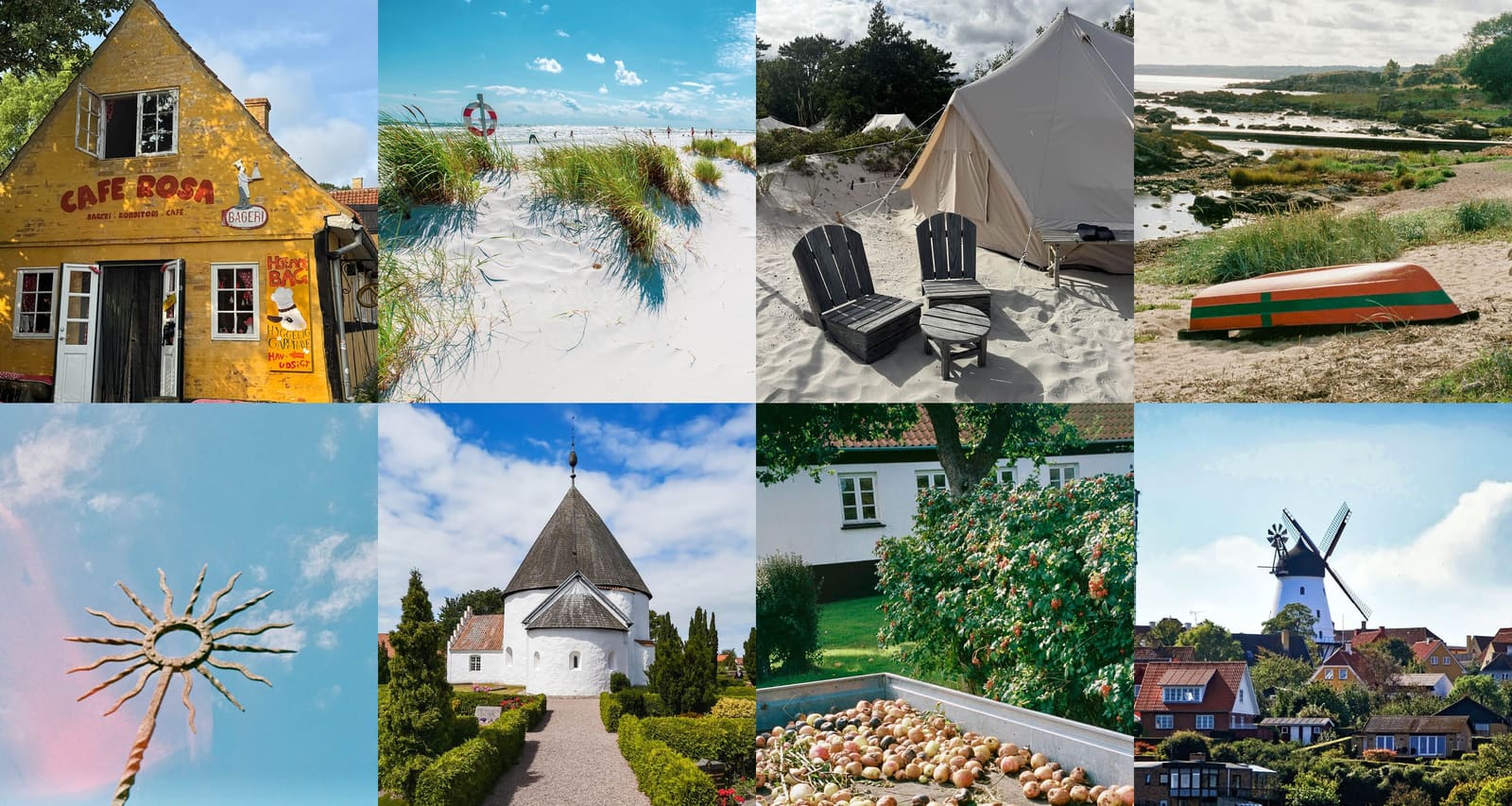
A Rock Between Worlds
The ferry from Copenhagen takes three and a half hours, cutting through grey-blue water until a dark line of granite rises on the horizon. Bornholm sits midway between Sweden, Germany, and Poland, technically Danish but geographically detached, a Baltic anomaly that for centuries existed as a world unto itself. Fishermen worked the cold waters. Farming families scratched out livings from thin soil. A handful of clockmakers, entirely self-taught, assembled timepieces in workshops lit by whale oil.
At Global Chic Voyage, we've watched remote islands reinvent themselves as luxury destinations, often at the cost of authenticity. Bornholm's transformation follows a different trajectory. Here, the metamorphosis has been led not by developers but by artists, drawn first by the quality of light, then by the clay beneath their feet, and eventually by one another.
The island's nickname, Sunshine Island, stems from a microclimate that grants it more sun than mainland Denmark. But the real illumination comes from something less meteorological: a creative ecosystem that has been quietly assembling itself for over a century, brick by careful brick.
The Clay and the Light
In the nineteenth century, deposits of kaolin and clay sparked a ceramics industry on Bornholm. At roughly the same time, painters began arriving. Members of what became known as the Bornholm School set up easels along the granite cliffs, captivated by the crystalline quality of northern light as it refracted off water and stone. The painter Olaf Rude was among them, documenting the island's dramatic coastlines in oils that captured both the harshness and the strange tenderness of the landscape.
After the Second World War, regular ferry service turned Bornholm into a summer retreat for Scandinavian vacationers. Families came for the beaches. Artists stayed for the solitude. When the Royal Danish Academy established its ceramics and glass program in the town of Nexø, the island's identity began to crystallize around craft. Galleries opened. Workshops multiplied. Students arrived from Copenhagen, then from farther afield, and many never left.
In 2017, the World Crafts Council, a UNESCO-affiliated organization, designated Bornholm as Europe's first World Craft Region. According to Dorthea Funder Kaas, coordinator at the Bornholm Centre for Crafts, the recognition confirmed decades of patient work. "Several elements reinforce one another," she explains. "The Royal Danish Academy's program, the Arts & Crafts Association Bornholm, a number of committed cultural institutions and the business sector's recognition of craft as one of Bornholm's strengths."
The island has also developed an increasingly international character. Students and makers now arrive from across Europe, Asia, and North America, drawn by both the academy's reputation and by something less tangible: the sense that on Bornholm, creative work is not an eccentric pursuit but the organizing principle of daily life.
The Restaurant That Changed Everything
If there is a single turning point in Bornholm's recent evolution, it occurred in 2007, when childhood friends Nicolai Nørregaard and Rasmus Kofoed opened Kadeau on the island's southern coast. Both were Bornholm natives. Both had trained in Copenhagen's finest kitchens. Their restaurant, set in a converted beach house, became a pioneer of New Nordic cuisine, foraging ingredients from the island's forests and shores and presenting them with a restraint that bordered on reverence.
Kadeau's success captured the imagination of Copenhagen's creative class. Designers, architects, and gallerists began making the journey. What they found was an island where makers could afford studio space, where collaboration was built into the social fabric, and where the pace of life allowed for the kind of sustained attention that ambitious work requires.
Local craftspeople like Oh Oak and Baltic Sea Glass began creating minimalist tableware for the island's restaurants. The relationship was symbiotic: chefs elevated the dining experience, and ceramicists gained visibility through association with acclaimed kitchens. The island's craft scene, which had existed for decades in relative obscurity, suddenly found itself part of a broader cultural conversation about materiality, sustainability, and place.
A Community Built on Openness
Walk into Pernille Bülow's glass-blowing workshop in the coastal town of Svaneke, and you are immediately struck by the heat. The furnace glows orange. Bülow pulls molten glass from the fire, shaping it with breath and gravity, her movements practiced but never mechanical. Visitors are welcome to watch, to ask questions, to see the entire process unfold. This openness is characteristic of Bornholm's craft community.
Emilie Fruergaard, a ceramics student at the Royal Danish Academy, describes the island as a place where learning happens not only in classrooms but through proximity to working makers. "You're surrounded by talented, skilled makers, often frontrunners exploring new techniques," she notes. "It feels incredibly inspiring."
At Postgade 21, a makers-run collective in Gudhjem, you can purchase clothing by Bornholm designer Jannie Bramsen, whose work blurs the line between garment and sculpture. At Matter, a shop specializing in sustainable homewares, the inventory reflects a commitment to materials that will outlast trends. At SOL Nexø and Galleri Sonja, artist-led spaces showcase work that ranges from functional ceramics to conceptual installations.
The sense of camaraderie extends beyond individual studios. Kaas observes that there is a strong belief across the island that strengthening the environment as a whole benefits everyone. "There's a generous, collaborative spirit," she says, one that encourages knowledge-sharing rather than competition.
This ethos is also evident in newer ventures like Hodda Bornholm, a recently opened folkhus, a Danish term for a community cultural center that brings together exhibitions, performances, and social gatherings. The Dunes, a beachside culinary project by the Kadeau team, offers a more casual interpretation of the restaurant's philosophy, with an emphasis on seasonal produce and communal dining.
The Challenge of Sustainability
For all its creative vitality, Bornholm faces practical challenges. Many makers navigate modest, seasonal incomes. The summer months bring tourists and sales; winter can be lean. Kaas notes that a major focus now is creating business models that allow craftspeople to sustain year-round practices. The EU-funded Hephaestus project, which establishes a living laboratory on Bornholm, aims to address this by exploring how traditional craftsmanship can intersect with circular production, technology, and sustainable materials.
The question is not whether Bornholm can remain a creative sanctuary, but whether it can do so in a way that allows its artists to thrive economically. The island's appeal lies in its unhurried pace, its affordability relative to Copenhagen, and its commitment to craft over commerce. Maintaining that balance as the island gains international attention will require intention.
The Badehoteller and the Bell Tents
Accommodation on Bornholm reflects the island's character. Melsted Badehotel, a traditional Danish seaside hotel dating to the 1930s, perches directly above Melsted beach. Its twenty-one rooms are decorated in a minimalist Nordic style, all pale wood and linen. Jantzen's Hotel in Gudhjem, the town's oldest, has been welcoming guests since 1872. It lacks high-tech amenities but compensates with genuine warmth and a bloom-filled garden ideal for slow breakfasts.
For those seeking something more transient, Dunes Beach Camp offers glamping on Balka Beach, where the sand is so fine it was once used to fill hourglasses. The camp operates for only ten weeks each summer, with bell tents outfitted in Danish textiles and an on-site restaurant serving a simpler, more soulful version of Kadeau's fine dining.
The lodging options mirror the island itself: unpretentious, rooted in place, and designed for visitors who value atmosphere over opulence.
The Smokehouses and the Sol
Bornholm's white, multi-chimneyed smokehouses are a defining feature of its coastline. Of the hundred-plus that once operated across the island, only ten functional smokehouses remain. Hasle Røgeri is among them, still smoking herring over alder wood in the traditional manner. The island's signature dish, Sol over Gudhjem, is served here: smoked herring, chives, red onion, and a raw egg yolk over buttered rye bread. It is simple, elemental, and deeply tied to place.
At Mikkeller Aarsdale, set in the fishing village of Årsdale, fifteen craft beers are on tap, and burgers are served in heaping portions. The views over the small beach are postcard-worthy, but the atmosphere is unpretentious, the kind of place where locals and visitors mingle without ceremony.
Food on Bornholm is not about spectacle. It is about ingredients, seasonality, and the kind of restraint that allows flavor to speak for itself.
The Museum and the Merchant's Building
Bornholms Kunstmuseum, designed in the 1990s by Johan Fogh and Per Følner, is a study in light and space. The architecture alone justifies a visit, but the collection offers a window into the island's artistic heritage, from the Bornholm School painters to contemporary artists working on the island today.
The Bornholm Centre for Arts & Craft at Grønbechs Gård, housed in a restored 1875 merchant's building in Hasle, serves as both gallery and laboratory. It hosts ten to fifteen seasonal exhibitions, showcases degree shows from the Royal Danish Academy, and supports local craftspeople through residencies and mentorship.
These institutions are not grand in scale, but they are serious in intent. They function as anchors for the island's creative community, spaces where history and innovation coexist without friction.
A Place to Live on Your Own Terms
There is a particular quality to places where creative work is not an aberration but the norm. On Bornholm, the rhythm of life bends around the demands of making: long hours in the studio, collaborative dinners, impromptu visits to one another's workshops. It is a life that requires trade-offs, financial and otherwise, but it is a life lived on one's own terms.
The island's appeal is not about escapism. It is about finding a context in which serious work can be done without the constant noise of distraction. For those who come here, whether for a summer or a lifetime, Bornholm offers something increasingly rare: the space to focus, to experiment, and to fail without an audience.
As the island gains recognition, the challenge will be preserving the conditions that made that work possible in the first place. But if the past century is any indication, Bornholm's creative community understands that sustainability, whether environmental or economic, is not a compromise but a necessity. The island has always been a place where people learned to work with what they had. That resourcefulness, more than any accolade, may be its most enduring strength.
Credit: Stephanie Gavan / Getty Images
Spot something wrong? Email editors@globalchicvoyage.com. We log every correction publicly.
RELATED
SEE ALL →
29 Jul 2026 / 5 min
27 Jul 2026 / 5 min
27 Jul 2026 / 5 min
27 Jul 2026 / 5 min