
After the Crowds Left Yumeshima: How Osaka Is Turning an Expo Into Infrastructure
Twenty-nine million visitors came and went; what remains are bridges, metro lines, and a waterfront city learning to live with its new scale.
MA
9 Jun 2026 · 5 MIN READ · UPDATED 17 AUG 2026
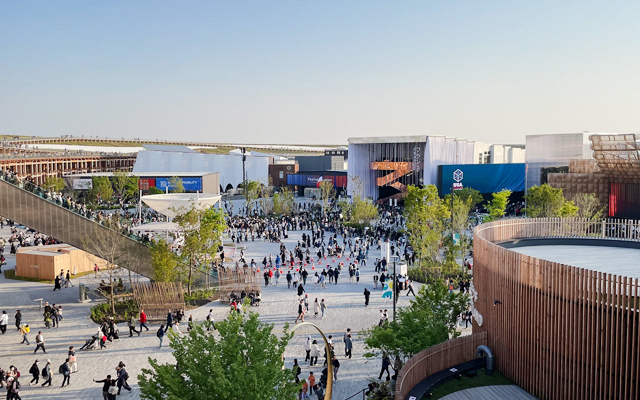
The Morning After
The banners are down, the pavilions dismantled. Yumeshima, the artificial island in Osaka Bay that spent six months at the centre of global attention, has returned to something like quiet—except that quiet is relative when you have built a new metro station, widened two bridges, and reconfigured an international airport to handle eight million more passengers a year. The morning after a world's fair is never really morning; it is the beginning of a longer reckoning with what you have built and why.
Expo 2025 drew twenty-nine million visitors across one hundred and eighty-four days. The Japanese government estimates the economic impact at 3.6 trillion yen, a figure large enough to justify the roadworks, the expanded terminals, the late-night debates over whether an artificial island could bear the weight of ambition. But numbers alone do not tell you what a city inherits when the event ends. At Global Chic Voyage, we have watched other host cities grapple with this question—Barcelona after the Olympics, Shanghai after its own Expo, Dubai after every iteration of itself—and the answer is rarely simple. Infrastructure can be a gift or a burden, depending on whether the city grows into it or is crushed beneath it.
Osaka, it appears, is betting on growth.
What Gets Built When the World Is Watching
Four years before the Expo opened, Japan's Ministry of Land, Infrastructure, Transport and Tourism began upgrading not just Yumeshima but the arterial systems that connect it to the rest of Kansai. The Osaka Metro's Chuo Line was extended to a new station on the island, cutting travel time from central Osaka to thirty minutes. Train intervals were reduced to two and a half minutes during peak hours, a frequency that transforms a metro line from convenience into reflex. Platform doors were installed across all subway stations, a detail that matters less for safety than for the signal it sends: this is a system built for volume, for the kind of passenger flow that does not pause.
Road infrastructure followed the same logic. The Yumemai and Konohana bridges, which link Yumeshima to the mainland, were widened to ease congestion—a recognition that an island accessible only by bottleneck is not accessible at all. Kansai International Airport, thirty kilometres south, completed a major renovation of Terminal 1, expanding the international departures area by sixty per cent and introducing smart security lanes. Annual capacity rose to forty million passengers. The largest walk-through duty-free area in Japan was installed, a commercial afterthought that doubles as a statement of intent: we expect you to linger, to spend, to return.
At Osaka Port, the Tempozan Wharf passenger terminal was rebuilt as a three-storey facility with upgraded customs and immigration processing, designed to turn around large cruise ships faster. The city has also introduced new sightseeing services on the Yodo River and Osaka Bay, connecting Osaka with Kobe and Awaji Island by water—a network that treats the bay not as a barrier but as infrastructure in its own right.
What gets built when the world is watching is rarely what the world sees. The Expo itself was spectacle, pavilions and light shows and the performance of futurity. But the real construction was quieter, more permanent, and far more expensive: the kind of infrastructure that takes years to justify and decades to pay off.
The Second Act of an Artificial Island
Yumeshima is not finished. The northern section of the island is being developed into a 492,000-square-metre integrated resort—casino, hotels, exhibition space, conference facilities, theatre—valued at approximately ten billion U.S. dollars. Three hotels will offer a combined 2,500 rooms: MGM Osaka, MGM Villas, and Musubi Hotel, names that signal both global capital and localised branding. Thirty thousand square metres of exhibition space and thirty-seven thousand square metres of conference facilities will anchor the complex, along with a 3,500-seat theatre and a tourism concierge promoting travel across all seven prefectures of Kansai.
Scheduled to open in autumn 2030, the resort is projected to attract twenty million visitors annually, including six million from abroad. Those figures are ambitious but not implausible; Osaka has spent the past decade remaking itself as a gateway city, a place where international travellers begin or end multi-destination itineraries that sweep through Kyoto, Nara, Hiroshima, and beyond. The Expo accelerated that transformation by compressing years of infrastructure investment into a single deadline, and by drawing high-level diplomatic visits that raised Osaka's profile on the international stage.
But there is a risk inherent in building for scale. An integrated resort designed for twenty million visitors a year is not easily repurposed if those visitors do not materialise. A metro line built for Expo-level crowds becomes an expensive ghost train if the crowds do not return. Osaka is betting that the visitors who came for the Expo will come back for the resort, and that the resort will anchor a broader ecosystem of waterfront tourism, cultural programming, and regional connectivity. It is a reasonable bet, but it is still a bet.
Why This Matters Beyond Osaka
The Expo legacy is not confined to Yumeshima or even to Osaka. According to Expo 2025 secretary general Hiroyuki Ishige, the infrastructure upgrades are intended to support regional revitalisation across Japan—a recognition that Osaka's success as a gateway depends on the vitality of the destinations it connects. Kyoto, Nara, Hiroshima: these are not competing cities but complementary nodes in a regional network, and the Expo has given Osaka the physical and symbolic infrastructure to position itself at the centre of that network.
This is the quiet ambition of the post-Expo strategy: not to replace Tokyo, but to offer an alternative axis of movement through Japan. Tokyo will always be the capital, the financial hub, the city of first arrival for most international travellers. But Osaka, with its new metro capacity, its expanded airport, its waterfront resort, and its connections to the cultural heartland of Kansai, is positioning itself as the city of longer stays, multi-destination itineraries, and regional exploration.
Whether that ambition is realised depends on variables beyond infrastructure: exchange rates, geopolitical stability, the willingness of travellers to venture beyond Tokyo's gravitational pull. But infrastructure is the precondition. You cannot build a gateway city without the gates.
Living With Scale
The Expo has ended, but Yumeshima is only beginning its second act. The question for Osaka is whether it can live with the scale it has built—whether the bridges, metro lines, and airport terminals designed for twenty-nine million Expo visitors can be absorbed into the daily rhythms of a city that has always been more pragmatic than spectacular, more merchant than monument.
At Global Chic Voyage, we have seen other cities struggle with this transition. Infrastructure built for events often feels overbuilt in the years immediately after, before the city grows into it. But Osaka has an advantage: it is not starting from zero. It is a city of nine million people, a regional hub, a place with its own economic gravity. The Expo did not invent Osaka's ambitions; it accelerated them, and left behind the physical systems to sustain them.
The banners are down. The pavilions are gone. What remains is a city learning to live with its new scale, and an artificial island that is no longer artificial in its ambitions.
Spot something wrong? Email editors@globalchicvoyage.com. We log every correction publicly.
RELATED
SEE ALL →
28 Jul 2026 / 5 min
22 Jul 2026 / 5 min
8 Aug 2026 / 5 min
7 Aug 2026 / 5 min