
Where Yucatán's Ancient Temples Meet Caribbean Waters
Cancún remains Mexico's most layered coastal destination - and the one we keep returning to for reasons far beyond its beaches.
SI
27 Jul 2026 · 5 MIN READ · UPDATED 17 AUG 2026
A City Built on Contrasts
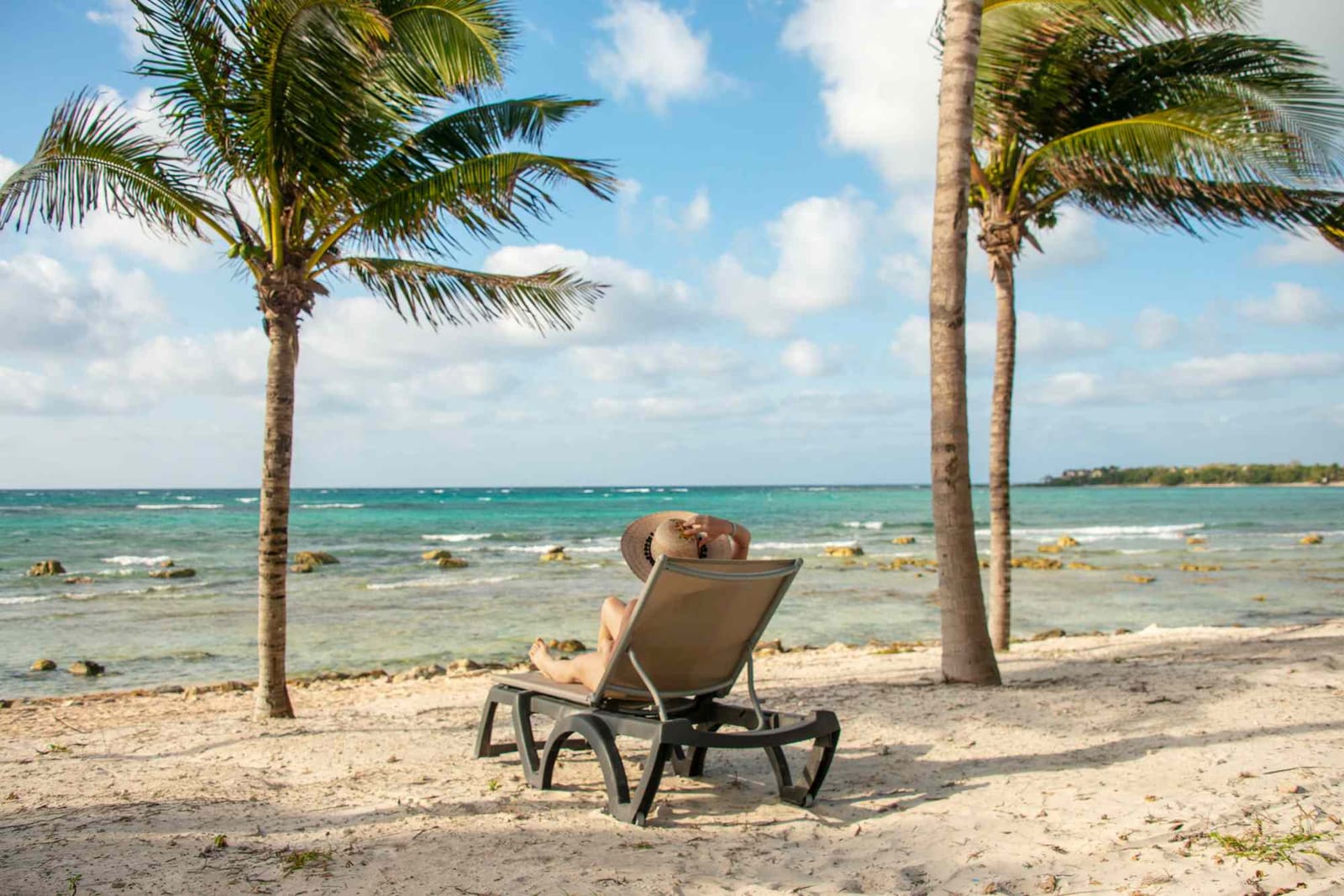
The first time you arrive in Cancún, it's easy to see only what the hotel zone wants you to see: a slender strip of sand caught between lagoon and sea, lined with towers of glass and concrete that could belong to Miami or Dubai. But step beyond that glittering corridor and you'll find something far more compelling, a landscape where the Caribbean crashes into the remnants of an ancient civilization, where underground rivers carve through limestone, and where a single day can take you from a pyramid temple to a cenote pool so clear you can count fish from thirty feet above.
At Global Chic Voyage, we've watched Cancún evolve from a planned resort city into something more complex, a gateway not just to beaches but to the ecological and archaeological wonders of the Yucatán Peninsula. The city itself was born in the early 1970s, a government initiative to create Mexico's answer to Acapulco on the Caribbean coast. What emerged was a destination that, for all its commercial polish, sits atop one of the most fascinating landscapes in the Americas.
The Mayan Legacy in Plain Sight
Drive south from the hotel zone and within half an hour you'll reach Tulum, where a walled Mayan city overlooks the sea from atop limestone cliffs. Head west and you encounter Cobá, a sprawling archaeological site where you can still climb Nohoch Mul, one of the tallest pyramids in the Yucatán. And then there's Chichén Itzá, a UNESCO World Heritage site and one of the New Seven Wonders of the World, accessible as a day trip from Cancún.
These aren't reconstructions or theme park approximations. They're the remnants of a civilization that flourished here for centuries, building cities, tracking celestial movements, and developing a complex understanding of agriculture and water management in a region where surface rivers don't exist. The temples you see today, weathered and overgrown, are part of a continuum that stretches back more than a thousand years.
What strikes us about visiting these sites from a base in Cancún is the compression of time and culture. You can breakfast at a contemporary resort, lunch in the shadow of a pyramid, and return by sunset to watch the lagoon turn gold. It's a juxtaposition that could feel jarring, but instead it offers a kind of perspective, a reminder that luxury and history, nature and development, exist here in uneasy but undeniable proximity.
Beneath the Surface
The cenotes scattered across the Yucatán are perhaps the region's most distinctive natural feature. These are sinkholes, formed when the limestone bedrock collapses to reveal the underground rivers flowing beneath. For the Maya, cenotes were sacred, gateways to the underworld and vital sources of fresh water. Today, they're swimming holes, diving sites, and windows into an hidden aquifer system that runs for miles beneath the jungle.
Some cenotes are open to the sky, broad pools ringed with vines and ferns. Others are enclosed in caverns, accessible only through narrow openings, where shafts of light penetrate the darkness to illuminate water so transparent it barely seems to exist. Swimming in a cenote is unlike swimming anywhere else. The water is cool, almost cold, and carries a mineral clarity that makes every stone on the bottom visible. There's a stillness to these places, a quiet broken only by the drip of water from the cave ceiling and the occasional rustle of bats overhead.
Cenote Ik Kil, near Chichén Itzá, is one of the most photographed, a cylindrical cavern draped with hanging roots and vines. Gran Cenote, outside Tulum, offers snorkeling among freshwater turtles and small fish. Dos Ojos, part of an extensive cave system, attracts divers from around the world. Each cenote has its own character, its own microclimate and ecology, and visiting several reveals the astonishing diversity of these underground worlds.
The Resort Question
Cancún's hotel zone is home to dozens of all-inclusive resorts, many of which have earned recognition for design, service, and culinary programs. The question for travelers isn't whether to stay at a resort, it's which kind of experience you're seeking. Some properties lean into contemporary minimalism, with clean lines and infinity pools that blur the boundary between pool and sea. Others embrace Mexican hacienda aesthetics, with courtyards, fountains, and tile work that reference colonial architecture. Still others prioritize family amenities, with water parks, kids' clubs, and programming designed to keep multiple generations entertained.
What unites the better resorts here is an understanding that the natural setting, those stretches of white sand and that improbable turquoise water, is the real luxury. The most successful properties frame the view rather than compete with it, using architecture and landscaping to direct your gaze outward, toward the horizon.
We've noticed a shift in recent years toward smaller, more design-conscious hotels, particularly in the areas south of the main hotel zone. These properties trade scale for intimacy, offering fewer rooms but more personalized service, and often a stronger connection to local culture and ecology. It's a trend worth watching, a sign that Cancún's hospitality landscape is maturing beyond the all-inclusive model that defined its early decades.
Beyond the Beach
Cancún's culinary scene has deepened considerably, moving beyond resort buffets to embrace regional Mexican cuisine and contemporary interpretations of Yucatecan traditions. In the downtown area, known as Ciudad Cancún, you'll find taquerías serving cochinita pibil, a slow-roasted pork dish marinated in citrus and achiote, and restaurants specializing in seafood caught that morning in the Caribbean or the Gulf of Mexico.
The city's nightlife remains robust, concentrated in the hotel zone and catering largely to international visitors. But there's also a quieter side to Cancún, found in the markets and neighborhoods where locals live and work, where the pace slows and the focus shifts from tourism to daily life. Mercado 28 offers crafts, textiles, and street food in a setting that feels more authentic than the sanitized shopping centers of the hotel zone.
Isla Mujeres, a short ferry ride from Cancún, provides another kind of escape. This small island, just five miles long, has a laid-back atmosphere that contrasts sharply with the mainland's intensity. Golf carts replace cars, and the pace of life drops several notches. The island's western shore offers calm, shallow waters ideal for swimming, while the southern tip features a sculpture garden and dramatic coastal views.
The Ecology of the Coast
The Mesoamerican Barrier Reef, the second-largest coral reef system in the world, runs along the coast here, offering some of the best snorkeling and diving in the Caribbean. The reef is home to hundreds of species of fish, sea turtles, rays, and, if you're lucky, nurse sharks and dolphins. Visibility often exceeds one hundred feet, and the water temperature hovers around eighty degrees year-round.
But the reef is under pressure. Climate change, coastal development, and tourism have all taken a toll, leading to coral bleaching and habitat loss. Conservation efforts are underway, including coral restoration projects and marine protected areas, but the challenges are significant. Visiting the reef comes with a responsibility to minimize impact: using reef-safe sunscreen, avoiding contact with coral, and supporting operators committed to sustainable practices.
The beaches themselves are constantly in motion, shaped by currents, storms, and seasonal shifts. What you see one year may look different the next, as sand is deposited or eroded, and as vegetation grows or retreats. It's a reminder that this landscape, for all its resort infrastructure, remains dynamic and vulnerable, subject to forces far larger than any development plan.
The Light at Different Hours
We've come to appreciate Cancún most in the hours that bookend the day. Early morning, before the crowds arrive and the heat builds, when the light is soft and the water still. And late afternoon, when the sun begins its descent and the quality of light shifts, turning the sea from bright turquoise to something deeper, almost cobalt.
There's a particular moment just before sunset when the color of the water seems to intensify, as if the ocean is gathering all the light it can before darkness falls. It's a fleeting thing, lasting maybe ten or fifteen minutes, but it's worth arranging your day around. Find a spot facing west, whether from a beach, a rooftop, or a boat, and watch the transformation. The sky goes through its familiar progression, orange to pink to purple, but it's the water that holds your attention, reflecting and refracting the changing light until it's impossible to say where sky ends and sea begins.
This is the Cancún that stays with you, not the clubs or the buffets or even the resorts, impressive as some of them are. It's the play of light on water, the cool shock of a cenote, the silent presence of a pyramid rising from the jungle. It's the sense that beneath the surface, both literal and figurative, lies something older, stranger, and more enduring than anything we've built on top of it.
Credit: Paul Biris / Getty Images
Spot something wrong? Email editors@globalchicvoyage.com. We log every correction publicly.
RELATED
SEE ALL →
8 Aug 2026 / 5 min
7 Aug 2026 / 5 min
31 Jul 2026 / 5 min
31 Jul 2026 / 5 min